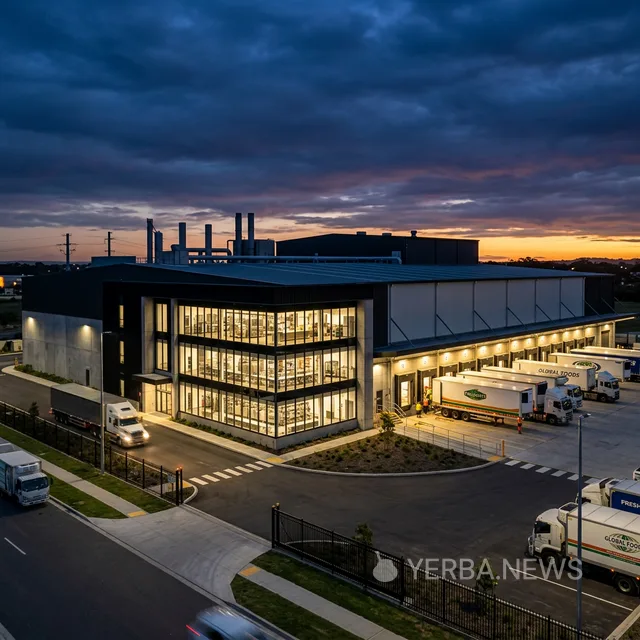
In what analysts are calling the most significant foreign direct investment in South America's agricultural sector this decade, a consortium led by Shenzhen-based Greenleaf Holdings has completed the acquisition of three yerba mate processing facilities in Paraguay's Itapúa and Alto Paraná departments. The deal, valued at approximately $200 million including committed capital improvements, gives Greenleaf control over an estimated 12 percent of Paraguay's total yerba mate processing capacity — and marks the first time a Chinese entity has taken a controlling stake in the mate industry.
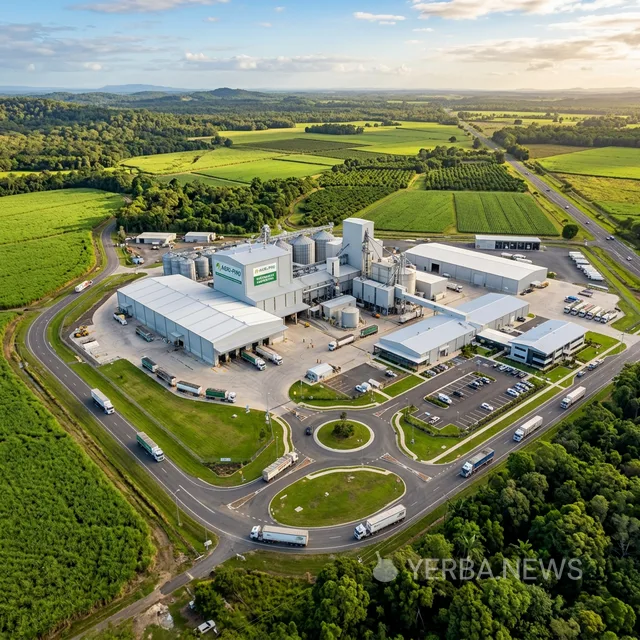
The acquisition, which closed in February 2026 after 14 months of regulatory review by Paraguay's competition authority (CONACOM), encompasses the processing mills formerly operated by Selecta S.A., one of the country's oldest yerba mate companies. The facilities collectively process approximately 35,000 metric tons of raw yerba mate annually and employ over 1,200 workers in a region where the industry is the primary source of formal employment.
Strategic Rationale: Securing Supply for a Billion-Person Market
Greenleaf's CEO, Dr. Wei Zhiming, framed the acquisition in explicitly strategic terms during a press conference in Asunción. "China's functional beverage market is projected to exceed $85 billion by 2030," he stated. "Yerba mate occupies a unique position — it offers the stimulant properties of coffee with the antioxidant profile of green tea, packaged in a product with cultural authenticity that Chinese consumers increasingly demand. Our investment is about securing supply at the source."
The Chinese market for yerba mate, while still nascent compared to Europe or North America, has grown at a compound annual rate of 42 percent since 2021. Much of this growth has been driven by the "new tea" movement — a consumer trend in first-tier Chinese cities that favors novel plant-based beverages with documented health benefits over traditional soft drinks. Brands like Yuanqi Senlin (元气森林) have already introduced mate-flavored products, creating consumer awareness that Greenleaf intends to capitalize upon with its own vertically integrated supply.
What China did with coffee over the past fifteen years — building a $30 billion domestic market from nearly zero — it is now positioned to do with yerba mate, but on an accelerated timeline. The infrastructure, the consumer sophistication, and the distribution networks are already in place.
— Dr. Wei Zhiming, CEO of Greenleaf Holdings
Geopolitical Implications and Local Concerns
The acquisition has not been without controversy. Paraguay's National Federation of Yerba Mate Producers (FENAPYM) expressed concern about the concentration of processing capacity in foreign hands, warning that vertical integration by a well-capitalized foreign entity could give Greenleaf disproportionate bargaining power over the roughly 8,000 small-scale producers who supply raw leaf to the acquired facilities.
The geopolitical dimension adds further complexity. Paraguay is one of only 12 countries worldwide that maintains formal diplomatic relations with Taiwan rather than the People's Republic of China. Analysts at the Fundación Paraguaya de Cooperación y Desarrollo have noted that significant Chinese investment in a strategically important agricultural sector could influence Paraguay's ongoing diplomatic calculus — a consideration that Beijing is unlikely to have overlooked.
For now, Greenleaf has committed to maintaining existing supplier contracts for a minimum of five years and has pledged $15 million for community development programs in the Itapúa region. Whether these commitments suffice to address the structural concerns raised by the acquisition will depend largely on the market dynamics that unfold as Chinese demand for yerba mate continues its rapid ascent.