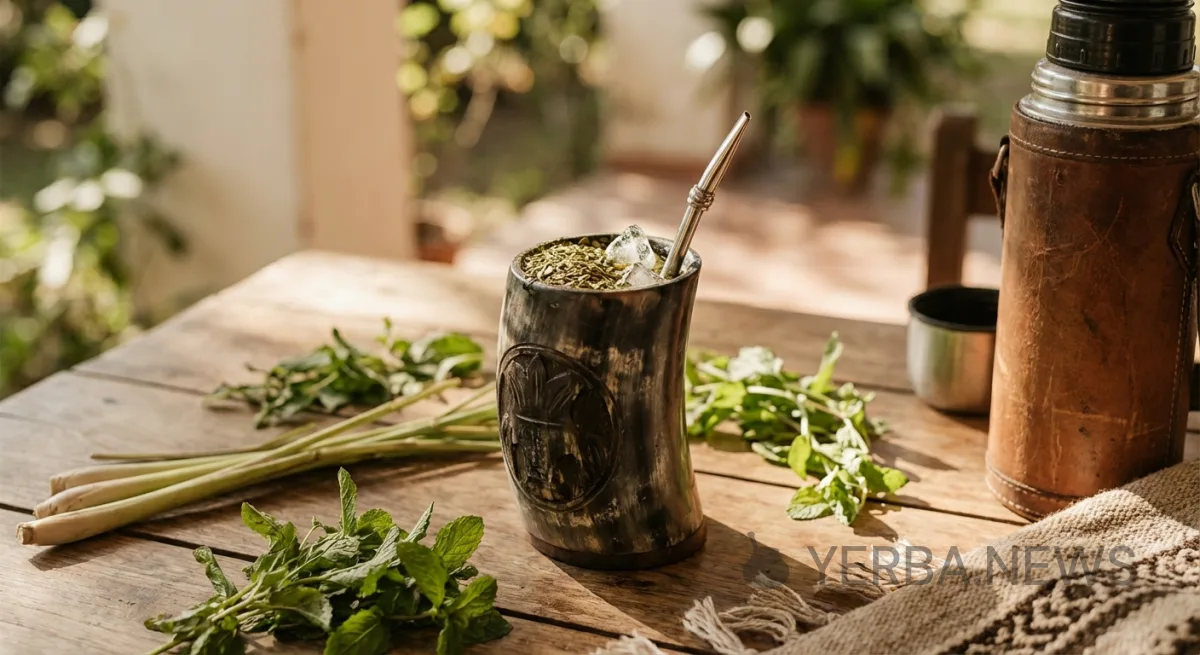
While the world's attention to yerba mate typically centers on the hot infusion — mate cebado in Argentina, chimarrão in Brazil — Paraguay's signature expression of Ilex paraguariensis is fundamentally different. Tereré is mate served cold: yerba mate packed into a guampa (a cup traditionally carved from cattle horn or palo santo wood), infused with ice-cold water, and — in its most culturally significant form — blended with pohã ñana, the Guaraní term for a pharmacopoeia of fresh medicinal herbs that are crushed and mixed into the water before serving.
The UNESCO Decision
In December 2020, during the 15th session of the Intergovernmental Committee for the Safeguarding of the Intangible Cultural Heritage, UNESCO inscribed 'Practices and traditional knowledge of Terere in the culture of Pohã Ñana, Guaraní ancestral drink in Paraguay' on the Representative List of the Intangible Cultural Heritage of Humanity. The decision (15.COM 8.b.27) marked Paraguay's first-ever inscription on UNESCO's cultural heritage lists — a milestone that was celebrated across the country as formal international recognition of a practice so embedded in Paraguayan identity that it had never required institutional validation.
More Than a Cold Drink
What UNESCO recognized was not the beverage itself but the social practice and traditional knowledge surrounding it. The tereré ritual involves a specific choreography of sharing: a single guampa and bombilla are passed from person to person within a circle, with the cebador (the preparer) controlling the water, the herb mixture, and the sequence of serving. The act of accepting tereré from someone is an expression of trust; the act of offering it is an expression of inclusion. Declining tereré in a social setting carries implications that go beyond beverage preference.
The pohã ñana dimension is equally significant. Traditional knowledge of medicinal herbs — which herbs cool the body, which settle the stomach, which aid digestion, which provide energy — is transmitted orally within families and communities, primarily by women. This ethnobotanical knowledge system, which draws from hundreds of plant species native to Paraguay's subtropical ecosystems, constitutes an informal pharmacopoeia that predates European contact by centuries. UNESCO's inscription explicitly recognizes this knowledge tradition as part of the heritage, not merely the act of drinking cold yerba mate.
Tereré in Daily Paraguayan Life
In Paraguay, tereré is consumed year-round but reaches its cultural apex during the country's long, subtropical summer, when temperatures routinely exceed 35°C. Construction workers pass guampas on building sites. Market vendors prepare tereré for customers. Office workers maintain communal tereré setups in break rooms. The National Day of Tereré, celebrated on the last Saturday of February, was established by presidential decree in 2011 — nine years before the UNESCO inscription — reflecting the beverage's status as a pillar of national identity.
The UNESCO recognition has amplified international awareness of tereré as a distinct category within the mate family. While Argentina's hot mate tradition and Brazil's chimarrão are already well-known to global consumers, tereré has remained largely invisible outside Paraguay, Bolivia, and parts of northeastern Argentina. The inscription provides a platform for Paraguayan producers to market tereré-specific yerba blends internationally — products formulated for cold-water extraction, with coarser cuts and enhanced herb profiles — and to position Paraguay's mate tradition as culturally distinct from those of its larger neighbors.