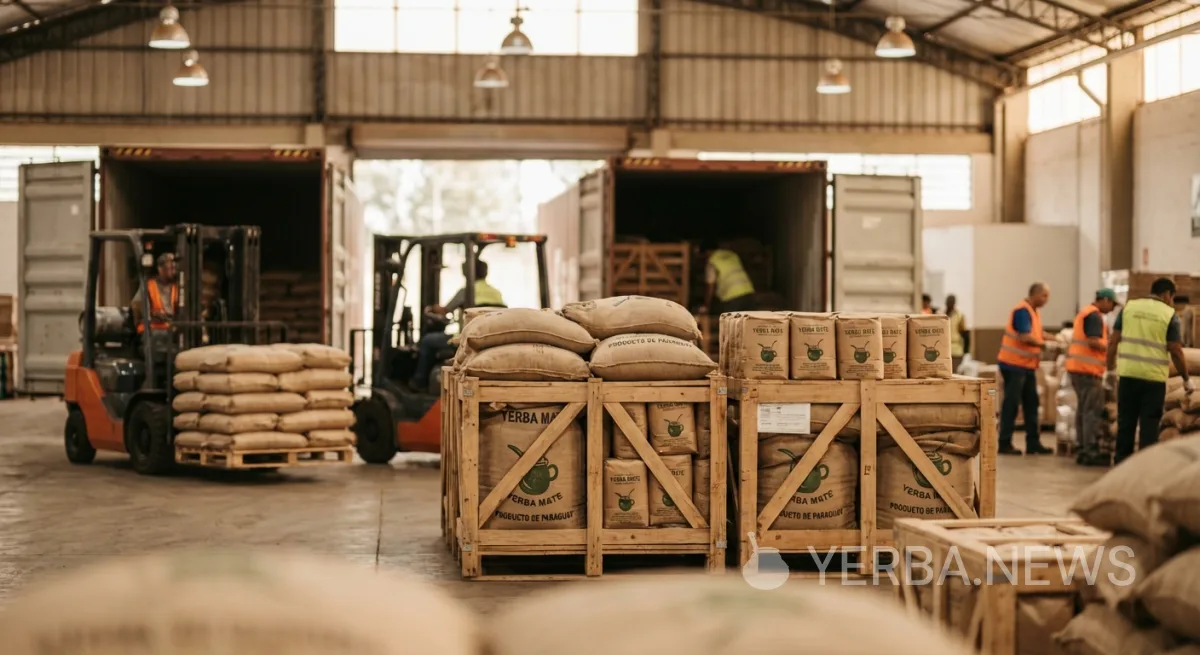
Paraguay — the plant's ancestral homeland and the country from which Ilex paraguariensis derives its botanical name — recorded a robust 16% year-on-year increase in yerba mate exports during 2024, according to data released by the Centro Yerbatero Paraguayo (Paraguayan Yerba Mate Center). Total exports reached 7,279 metric tons valued at approximately $13.5 million, with Paraguayan product reaching 26 countries across four continents.
Production Drives Export Growth
The export surge was underpinned by a 15% increase in domestic production during the same period. Paraguay's yerba mate industry, while significantly smaller than Argentina's, has distinguished itself through a focus on artisanal and organic production methods — characteristics that command premium pricing in international specialty markets. The country's production is concentrated in the eastern departments of Itapúa, Alto Paraná, and Canindeyú, where the subtropical climate and rich red soils provide optimal growing conditions.
Market Diversification Strategy
Among the 26 export destinations were established markets — Argentina, Brazil, Syria, and Lebanon — alongside growth targets in Europe (Spain, Poland, Austria, Sweden, Czech Republic, United Kingdom), the Middle East (Israel, Egypt), and the Americas (United States, Canada, Chile, Bolivia). The breadth of this distribution network reflects a deliberate diversification strategy pursued jointly by the Centro Yerbatero and Paraguay's Ministry of Industry and Commerce.
International trade fair participation has been central to this approach. Paraguayan delegations attended Gulfood 2024 in Dubai — the world's largest food and beverage trade exhibition — to build visibility in Arab and Asian markets that represent the sector's highest-growth opportunities. The INYM has cited the Middle Eastern market, led by Syria, as the single largest external demand driver for South American yerba mate; Paraguay's producers are positioning themselves to capture a growing share of this trade.
Small Country, Distinctive Product
Paraguay's yerba mate industry occupies a distinctive niche. Unlike Argentine yerba mate, which is typically aged for 12 to 24 months, Paraguayan yerba mate — particularly the style consumed as tereré (cold mate) — is often processed with minimal aging and may include herbal additives ('yuyos') such as mint, lemongrass, or boldo. This stylistic difference has created a separate consumer segment, particularly in domestic and Mercosur markets. As the sector aims to intensify its export push, maintaining the identity of Paraguayan yerba mate as a distinct product category — rather than a lower-volume alternative to Argentine product — will be a defining challenge.