As global agriculture confronts the reality of diminishing freshwater resources, a network of 85 yerba mate producers in Santa Catarina state, southern Brazil, has achieved what was once considered a theoretical ideal: complete water autonomy. The Rede Água Viva ("Living Water Network"), operating across 2,400 hectares of mate cultivation in the municipalities surrounding Chapecó, has documented three consecutive years of zero external water inputs — meaning no river extraction, no groundwater pumping, and no municipal water use for any aspect of production.
The achievement, verified by independent hydrological assessment from the Federal University of Santa Catarina (UFSC) and published in Nature Sustainability, represents the first documented case of a commercial-scale perennial crop operation achieving what researchers term a "closed-loop water system." The implications extend far beyond yerba mate: if the model proves transferable, it could offer a template for water-intensive crops worldwide as climate change intensifies drought cycles.
The Three-Pillar System
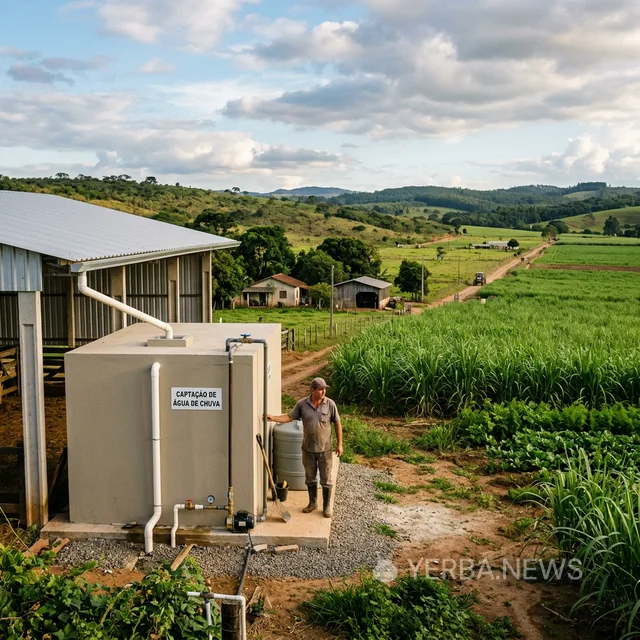
The network's approach rests on three integrated water management strategies. First, each farm maintains a system of rainwater collection cisterns calibrated to the local precipitation profile — Santa Catarina receives approximately 1,600 millimeters of annual rainfall, but increasingly concentrated in fewer, more intense events. The cisterns, with a combined capacity exceeding 12 million liters across the network, capture and store water during high-rainfall periods for use during the increasingly common dry intervals.
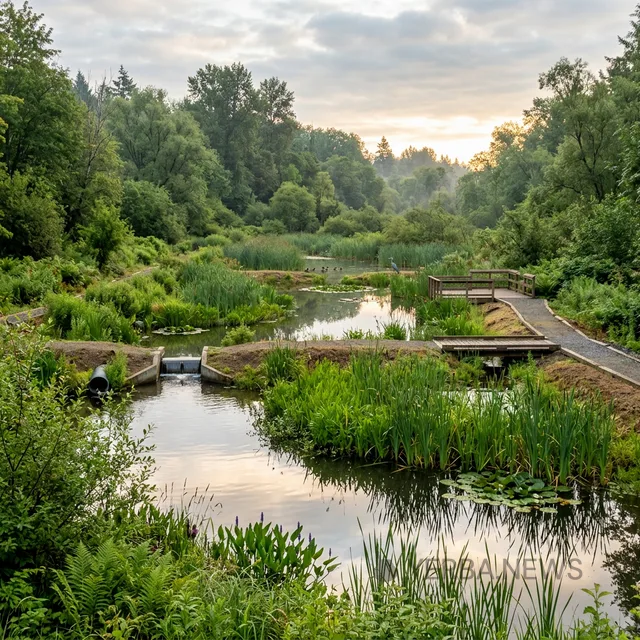
Second, the farms employ constructed wetlands — engineered ecosystems of native aquatic macrophytes including Typha domingensis and Eichhornia crassipes — to treat and recycle all process water from the sapecado (leaf-drying) and milling stages. These biological filtration systems, designed in collaboration with UFSC's Department of Sanitary and Environmental Engineering, achieve 99.2 percent removal of suspended solids and 97 percent reduction in biological oxygen demand, producing water clean enough for irrigation reuse.
The yerba mate plant itself is remarkably water-efficient once established — its deep root system accesses moisture that shallow-rooted crops cannot reach. Our innovation was not making the plant use less water, but ensuring that every drop of water that enters our system stays within it.
— Eng. Adriana Machado, Hydrological Coordinator, Rede Água Viva
Climate Resilience Through Design
The third pillar is the most radical: the complete elimination of conventional irrigation through soil management practices that maximize water retention. Cover cropping with nitrogen-fixing legumes, permanent mulching with yerba mate processing waste, and the maintenance of contour-aligned swales (shallow channels that capture runoff and allow it to percolate into the soil profile) have increased the soil's water-holding capacity by an estimated 340 percent compared to conventional cultivation on comparable soils.
The practical implications became dramatically apparent during the 2025 drought, the most severe in southern Brazil in 40 years. While conventional mate producers in the region reported yield losses of 30 to 45 percent, Rede Água Viva members experienced an average decline of only 8 percent — a resilience premium that translated directly into economic survival for farms operating on thin margins.
The Brazilian Agricultural Research Corporation (EMBRAPA) has designated Rede Água Viva as a reference site for its national program on climate-adaptive agriculture, and delegations from coffee and cocoa producing regions in Minas Gerais and Bahia have already visited to study the model's transferability to other perennial crop systems.