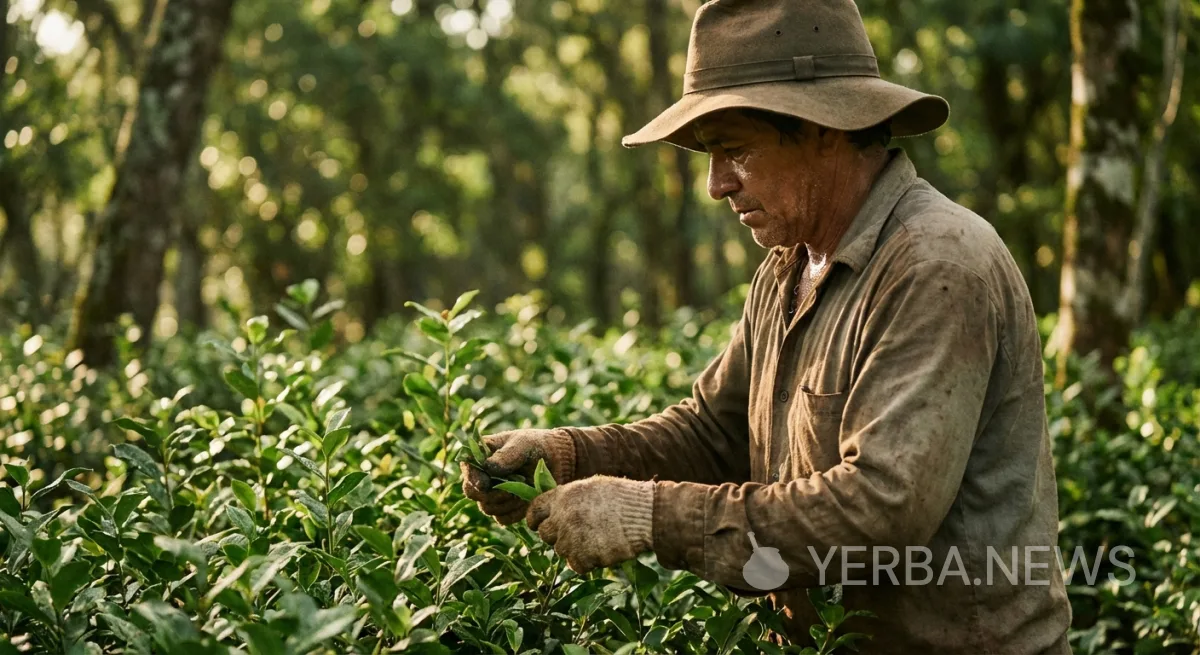
In the steamy subtropical grasslands of northeastern Argentina's Misiones province — the self-proclaimed mate capital of the world — there is a figure largely invisible in the global commodification of yerba mate: the tarefero. These are the low-paid laborers who, for generations, have risen before dawn and worked until sundown to hand-harvest the leaves of Ilex paraguariensis that will become the nation's defining beverage. An AP News report has brought their story into focus at a particularly uncertain moment for the industry.
A Lineage Spanning Centuries
The work of the tarefero traces a direct line to the colonial era, when Indigenous Guaraní communities labored on Jesuit mission plantations in the 17th and 18th centuries. The Jesuits recognized the commercial potential of yerba mate and systematized its cultivation — but the physical labor of harvesting remained, then as now, an intensely manual endeavor. Tareferos move through dense plantations carrying large raído sacks, selectively cutting branches and stripping leaves with machetes and shears. A skilled worker can harvest between 200 and 300 kilograms of green leaf per day — work that takes place in tropical heat and humidity, often without access to basic sanitation or shelter.
The Economics of Harvest Labor
Tareferos are typically among the lowest-paid agricultural workers in Argentina. Their wages are calculated per kilogram harvested, and the recent collapse in farmgate prices — driven by the Milei administration's elimination of INYM price controls — has directly compressed their earnings. Many tareferos work seasonally, following the harvest cycle from March through September, and lack formal employment contracts or social protections. Labor organizations in Misiones estimate that the province is home to approximately 17,000 tareferos and their families.
Yerba mate gives us harmony and strength. It's part of our culture.
— Isabelino Mendez, Indigenous village chief, Misiones province (AP News)
Between Tradition and Uncertainty
For the tareferos themselves, yerba mate occupies a dual identity. It is a commodity they harvest for subsistence wages, but also a beverage they consume during breaks for energy and social connection — the same ritual shared by millions of Argentine households. Misiones province accounts for approximately 90% of Argentina's yerba mate production, and the wellbeing of its harvesting workforce is inextricable from the industry's long-term sustainability.
The recent deregulation of yerba mate pricing has introduced new anxieties. Small producers fear that large agroindustrial corporations will set prices that independent farmers — and by extension, their tareferos — cannot survive on. Historically, the Argentine government supported the industry through INYM-administered minimum prices and labor standards. The removal of these protections, according to AP News sources, has left both producers and workers 'navigating without a compass' in a sector where the margin between viability and poverty has always been thin.