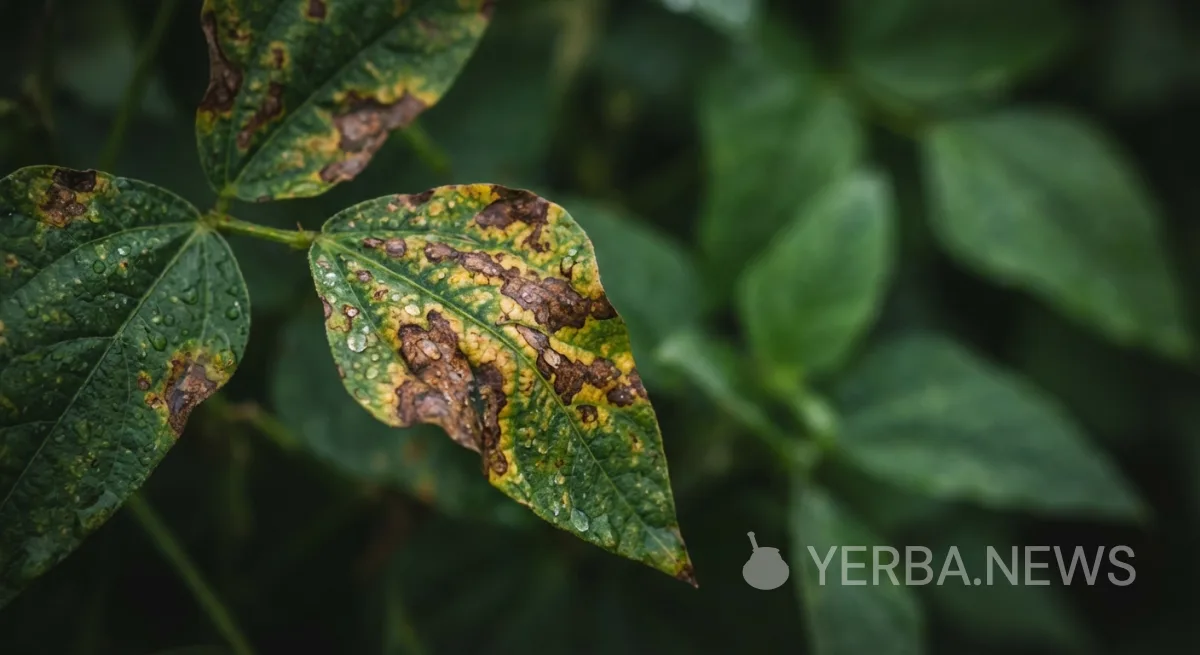
A study published in 2025 in Forest Pathology — a peer-reviewed journal specializing in diseases of forest and plantation trees — has formally identified two Fusarium species as causal agents of shoot blight in yerba mate (Ilex paraguariensis) in southern Brazil. The pathogens, Fusarium guttiforme and Fusarium mexicanum, were observed causing disease symptoms in the Brazilian states of Paraná and Rio Grande do Sul between 2021 and 2022, with F. mexicanum demonstrating significantly higher aggressiveness in pathogenicity trials. The finding represents the first peer-reviewed confirmation of these species as yerba mate pathogens and adds to a growing body of evidence that the crop faces intensifying phytosanitary risks.
The Pathology: Shoot Blight Explained
Shoot blight — the progressive necrosis and death of young growing tips on woody plants — can cause substantial economic damage in perennial plantation crops like yerba mate. Affected shoots fail to develop harvestable leaf biomass, and severe infections can compromise entire branches, reducing both current-season yields and the plant's productive capacity in subsequent harvest cycles. In nursery environments, where young plants are particularly vulnerable, Fusarium infection can result in total seedling loss.
The Fusarium genus is one of the most economically significant groups of plant pathogens globally, responsible for devastating diseases in crops ranging from bananas (Fusarium wilt, also known as Panama disease) to wheat (Fusarium head blight). Both F. guttiforme and F. mexicanum belong to the Fusarium fujikuroi species complex, a clade that has been extensively studied in tropical and subtropical agriculture but had not previously been documented as a significant threat to Ilex paraguariensis.
Regional Distribution and Severity
The states of Paraná and Rio Grande do Sul together account for a substantial share of Brazil's yerba mate production. Paraná alone is responsible for the majority of the country's cultivated acreage, and the region overlaps significantly with remnant Atlantic Forest — the biome in which Ilex paraguariensis evolved as a native understory species. The study's documentation of Fusarium pathogens in both states suggests the disease is not geographically isolated but rather present across the core of Brazil's yerba mate cultivation zone.
Climate Change as Force Multiplier
The Fusarium findings arrive against a backdrop of broader concern about the intersection of climate change and crop disease in Brazil. A study by Embrapa — Brazil's national agricultural research corporation — projects that by 2100, nearly half of all agricultural diseases in the country will intensify due to climate change, with fungal pathogens identified as the most likely to benefit from rising temperatures and altered precipitation patterns. For yerba mate specifically, a separate 2024 climate modeling study projected significant reductions in suitable cultivation area across Paraguay and northeastern Brazil as temperatures exceed the crop's optimal range of 15-22°C.
The convergence of emerging pathogens and shifting climatic envelopes creates a compounding risk profile for yerba mate producers. Warmer conditions that stress Ilex paraguariensis plants also tend to favor Fusarium proliferation, potentially creating a feedback loop in which weakened plants become increasingly susceptible to fungal colonization. Researchers have recommended integrated disease management strategies including resistant cultivar development, improved nursery sanitation protocols, and monitoring systems capable of detecting Fusarium presence in commercial seedlings before field transplantation.
Implications for the Global Supply Chain
For the global yerba mate industry — which depends heavily on production from Argentina, Brazil, and Paraguay — the Fusarium identification underscores the vulnerability of a supply chain concentrated in a narrow geographic and climatic band. Unlike globally distributed commodities such as coffee or tea, yerba mate is cultivated almost exclusively in a single bioregion. Any pathogen capable of spreading across this zone poses systemic risk to global supply. The Forest Pathology study concludes by calling for expanded surveillance programs and collaborative research between Brazilian and Argentine plant pathology institutions to assess whether F. guttiforme and F. mexicanum are present — but undiagnosed — in neighboring production countries.