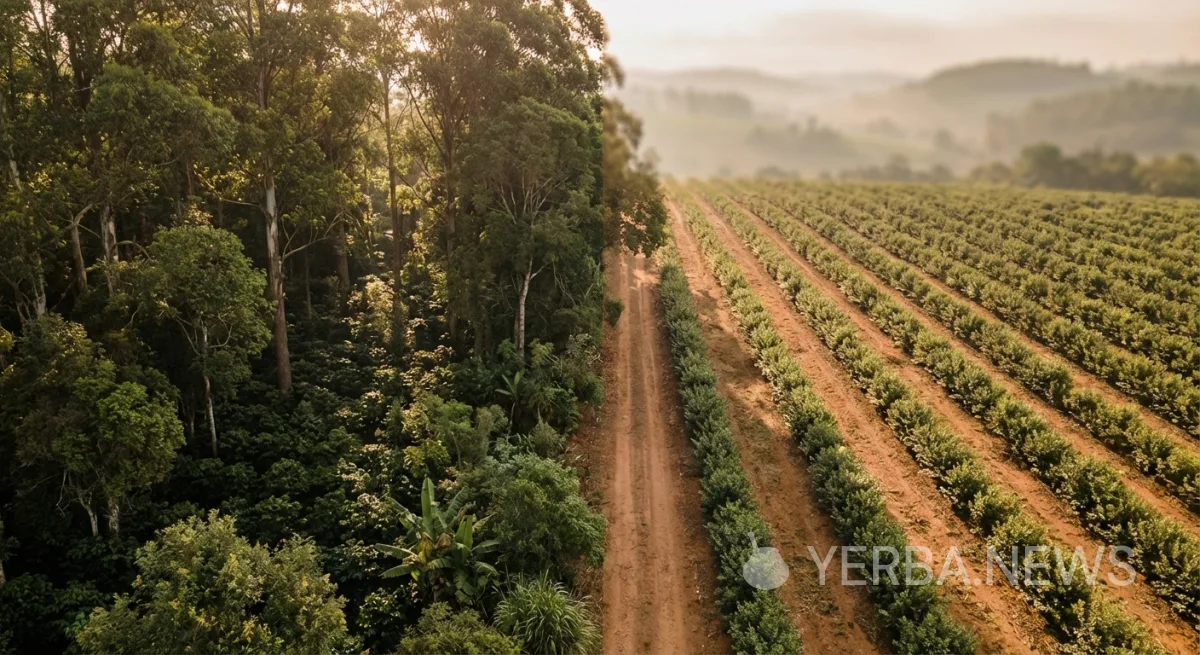
A comprehensive financial analysis published in Nature's Scientific Reports journal in 2025 has produced what may be the most rigorous economic comparison of organic and conventional yerba mate production to date — and the findings strongly favor the organic model. Examining data from Paraná State in southern Brazil, one of the world's principal Ilex paraguariensis growing regions, the study applied multi-index financial methodology and Monte Carlo risk simulations across a 15-year production cycle to assess the economic viability of both approaches on a per-hectare basis.
The Financial Case for Organic
The central finding is stark: organic yerba mate cultivation delivered a return on investment (ROI) of 12.03%, more than three times the 3.99% ROI achieved by conventional production methods. The margin difference stems from two complementary factors — organic yerba mate commands higher wholesale prices (driven by growing international demand for certified organic products) while simultaneously incurring lower input costs by eliminating expenditures on synthetic fertilizers and chemical pesticides.
Risk-Adjusted Returns
Beyond raw profitability, the study's Monte Carlo analysis — a probabilistic modeling technique that simulates thousands of possible economic scenarios — revealed that organic production carried a near-zero probability of generating a negative net present value (NPV) over the 15-year period. Conventional farming, by contrast, showed a measurably higher probability of financial loss, driven primarily by exposure to volatile input costs (particularly petroleum-derived fertilizers) and greater susceptibility to yield variability in monoculture settings.
Implications for the Global Supply Chain
The study's authors note that their findings align with a broader market trajectory: global demand for certified organic yerba mate has grown at a compound annual rate significantly exceeding that of conventional product over the past decade. Premium pricing for organic yerba mate currently ranges from 30% to 60% above conventional equivalents in export markets, according to industry data. Yet organic production accounts for a small fraction of total global output — estimated at less than 5% of Argentina's production and a modest share of Brazil's.
The research carries particular relevance for Brazil's smallholder farming sector, where the average yerba mate operation spans only a few hectares. For these producers, the transition to organic methods — while requiring a multi-year certification process and initial yield adjustments — represents a credible pathway to improved economic resilience. The study explicitly recommends that government extension services and agricultural cooperatives promote organic conversion programs as a strategy for rural poverty reduction in southern Brazil's yerba mate belt.