The Ruta de la Yerba Mate — the Yerba Mate Route — winds through 1,200 kilometers of subtropical landscape in northeastern Argentina's Misiones province, connecting plantations, processing mills, indigenous communities, and some of the most spectacular natural scenery in South America. Formally established as a certified tourism route in 2024, it has quietly become one of the continent's most compelling agritourism destinations, attracting visitors seeking an experience deeper than beaches and Patagonian glaciers.
The journey typically begins in Posadas, the provincial capital perched on the banks of the Paraná River, where the region's Mate Museum — housed in a beautifully restored 1920s warehouse — provides a comprehensive introduction to the plant's 15 centuries of human use. From the sacred beverage of the Guaraní people to its industrialization in the late 19th century, the museum traces mate's evolution through artifacts, oral histories, and immersive sensory stations where visitors learn to distinguish between mate varieties by aroma and taste.
Into the Plantations
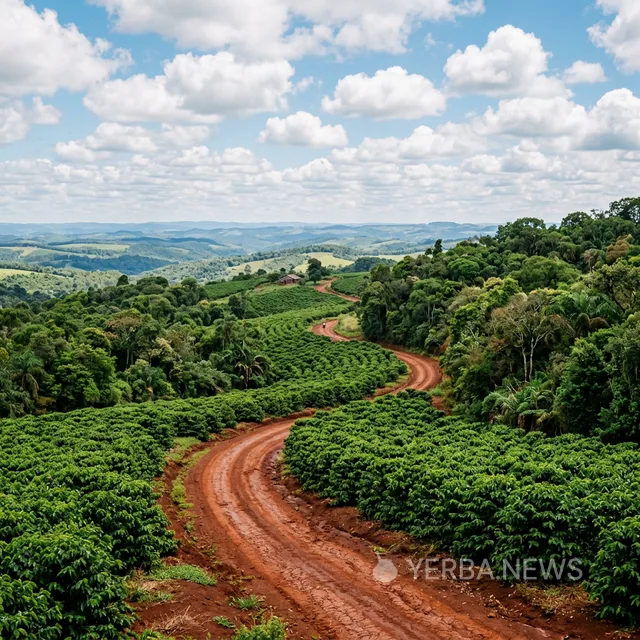
The road north from Posadas climbs into the hills, and the landscape transforms. Red-earth roads cut through walls of green as dense subtropical vegetation gives way to the ordered rows of yerba mate plantations. At Establecimiento Las Marías, one of Argentina's oldest and largest producers, guided tours take visitors through every stage of production: the manual harvest by tareferos (harvesters) who can pick up to 400 kilograms of leaf per day; the sapecado, where freshly cut branches are passed through a curtain of flame to halt oxidation; the year-long aging process in cedar warehouses; and the final blending and milling.
But the most memorable experiences are found at smaller operations. At Kraus, a family-run organic producer near the town of Gobernador Virasoro, visitors can spend a morning harvesting alongside workers, share a communal asado (barbecue) lunch, and learn to prepare mate in the traditional style — a quietly transformative experience for travelers from cultures where tea or coffee arrives anonymously in disposable cups.
Iguazú and Beyond
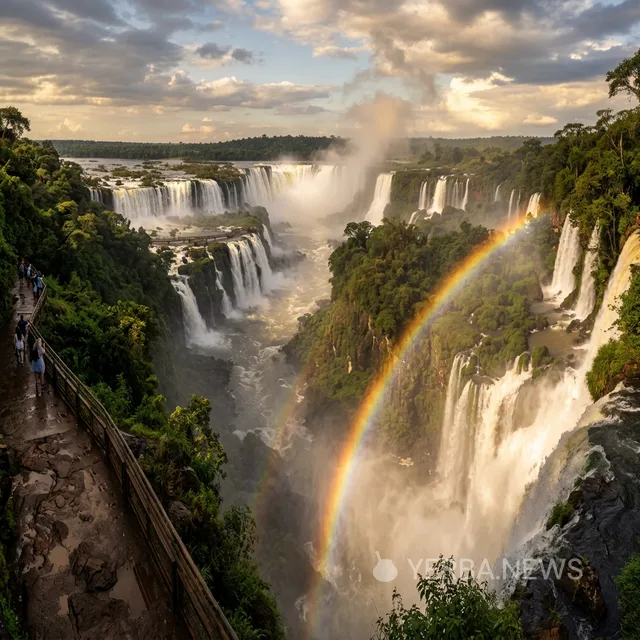
The route's proximity to Iguazú Falls — a UNESCO World Heritage Site and one of the natural wonders of the world — gives it a powerful anchor attraction. Most visitors combine two or three days on the mate trail with a visit to the falls, where the Iguazú River plunges over 275 cascades in a thundering display of raw natural power. The contrast between the contemplative serenity of a morning in the plantations and the overwhelming spectacle of the falls encapsulates the region's range.
Crossing the border into Paraguay adds another dimension. In Asunción's Mercado 4, the largest open-air market in the country, stalls overflow with yerba mate in every conceivable form: loose leaf, with herbs, with citrus peel, powdered, cold-brew blends for tereré. The market offers a window into Paraguay's deep mate culture — here, tereré (mate prepared with cold water and often fresh herbs) is not a health trend but a daily necessity, shared on street corners, at bus stops, and in offices.
For travelers seeking authenticity beyond the well-trodden paths, the Yerba Mate Trail offers something increasingly rare in an age of manufactured tourism: a real encounter with a living tradition, in the landscape where it began, shared by the people who know it best. You arrive as a visitor. You leave carrying a thermos.