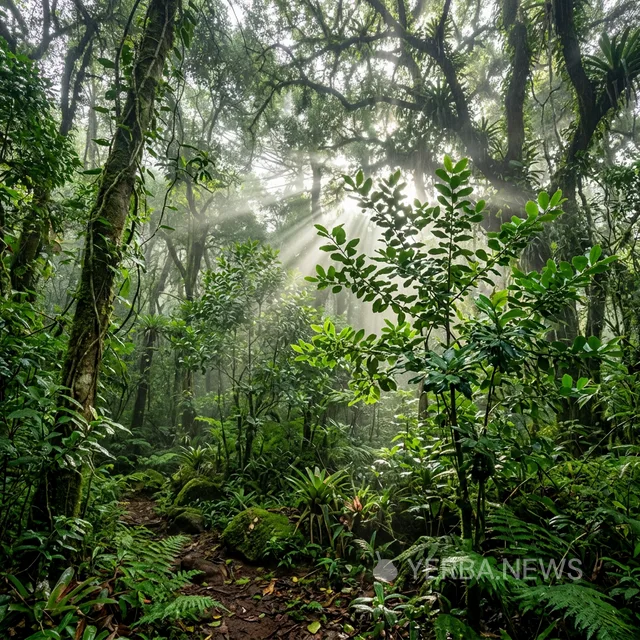
In the rust-red hills of Misiones province, Argentina's northeasternmost territory, a quiet agricultural revolution is taking root. A cooperative of 340 small-scale yerba mate farmers has spent the past five years developing what scientists are now calling the most promising model of regenerative agriculture in South America — one that doesn't merely reduce environmental harm but actively reverses it.
The cooperative, known as Tierra Roja ("Red Earth"), has achieved what industrial agriculture has long claimed was impossible: carbon-negative production at commercial scale. Independent audits conducted by the University of Buenos Aires and Germany's Thünen Institute confirm that for every kilogram of finished yerba mate produced, the cooperative's integrated farming system sequesters 2.3 kilograms of CO₂ equivalent — making it one of fewer than a dozen verified carbon-negative food production operations worldwide.
The Shade-Grown Difference
The key innovation is what agronomists call an "agroforestry polycultural system." Unlike conventional yerba mate plantations — which clear native vegetation and grow mate in monoculture rows exposed to full sunlight — Tierra Roja's members cultivate mate under the canopy of native Atlantic Forest species. This approach mimics the plant's natural habitat, since Ilex paraguariensis evolved as an understory species in the subtropical forests of the Paraná Basin.
The shade canopy, composed of native trees like lapacho, cedro, and palmito, serves multiple ecological functions simultaneously. The trees sequester carbon in their biomass and root systems. Their leaf litter builds topsoil at rates up to four times faster than exposed monoculture fields. The diverse tree cover provides habitat for native wildlife, including endangered species like the yaguareté (jaguar) and the broad-snouted caiman.
When you work with the forest instead of against it, everything changes. Our production costs are lower, our soil is richer every year, and the mate tastes better because the plant grows slowly, the way nature intended. The leaves develop more complexity.
— Don Carlos Benitez, founding member of Tierra Roja cooperative
Premium Markets Reward Sustainability
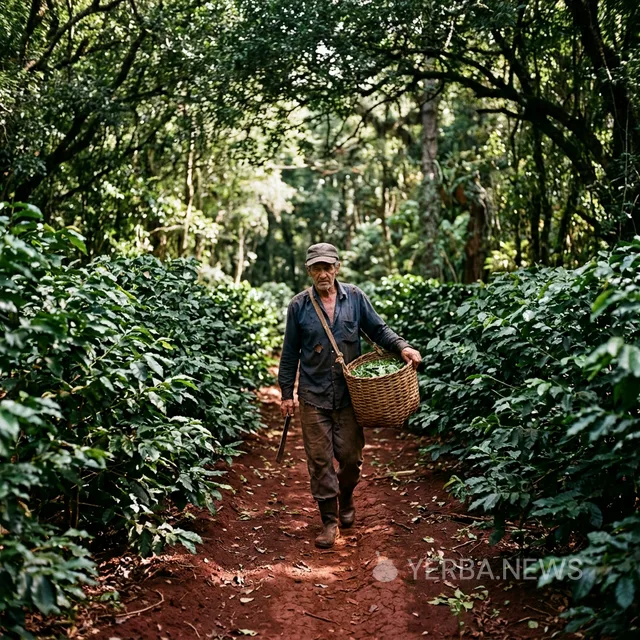
The ecological benefits have translated directly into economic premiums. Tierra Roja's shade-grown yerba mate commands prices 40 to 60 percent higher than conventional production, with the majority of output sold to specialty importers in Germany, the Netherlands, and Scandinavia. Organic certification, Fair Trade premiums, and the cooperative's new "Carbon Negative" label — verified by South Pole, a Swiss carbon credit agency — stack to create a viable livelihood for small farmers who might otherwise abandon agriculture.
The model is attracting attention from policymakers. Argentina's Secretariat of Agriculture has commissioned a feasibility study for scaling the Tierra Roja approach to 5,000 hectares by 2030, which would represent roughly 8 percent of the nation's total yerba mate cultivation area. If successful, the program could serve as a template for regenerative transitions in other crops, including coffee, cacao, and tea.