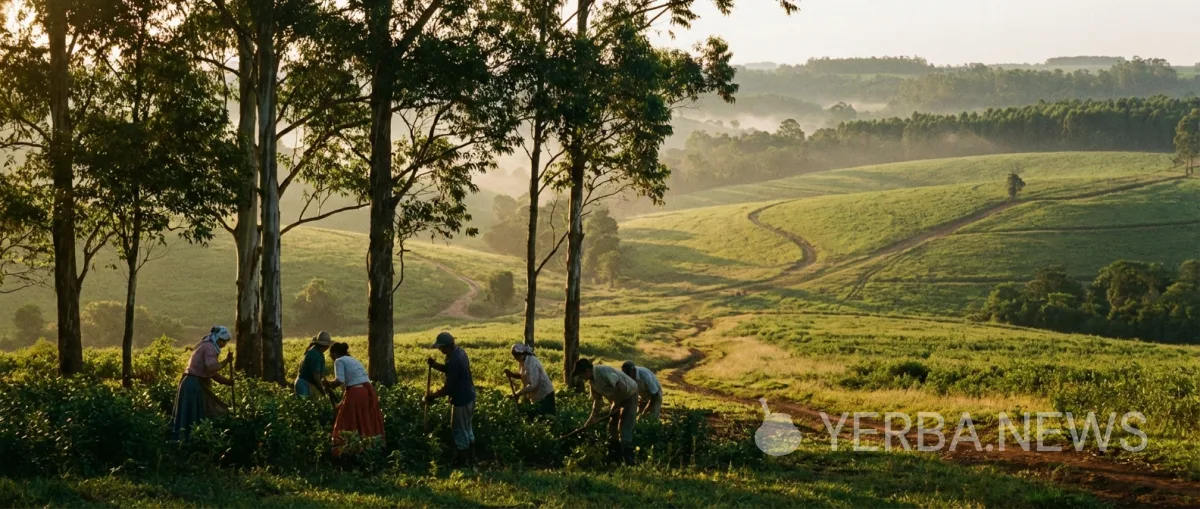
Paraguay's Ministry of Culture submitted the 'Yerba Mate Cultural Landscape' to UNESCO's Tentative List for World Heritage Sites in April 2022 — a formal step in the multi-year process toward potential inscription on the World Heritage List. The submission, documented on the UNESCO World Heritage Centre's website, characterizes the yerba mate landscape as an exceptional example of how a single plant species has shaped the cultural identity, economic systems, and land-use patterns of an entire nation over more than five centuries.
What the Submission Covers
The tentative listing frames the yerba mate cultural landscape across multiple UNESCO criteria: (iii) as a unique testimony to a cultural tradition of exceptional significance, (iv) as an outstanding example of a type of landscape that illustrates significant stages of human history, (v) as an outstanding example of traditional human interaction with the environment, and (vi) as directly associated with living traditions and beliefs of outstanding universal significance. The breadth of these criteria reflects the fact that yerba mate in Paraguay is not merely an agricultural product but a comprehensive cultural system — encompassing Indigenous Guaraní knowledge of the plant's properties, colonial-era Jesuit cultivation methods, 20th-century industrial processing traditions, and the contemporary social practice of tereré, which was inscribed on UNESCO's Intangible Cultural Heritage list in December 2020.
From Tentative List to Inscription
Placement on the Tentative List is a prerequisite for World Heritage nomination but does not guarantee inscription. Paraguay must prepare a detailed nomination dossier, undergo evaluation by ICOMOS (the International Council on Monuments and Sites) or IUCN (the International Union for Conservation of Nature), and secure a favorable decision from the World Heritage Committee. This process typically takes three to five years from the point of tentative listing, meaning that a formal nomination could occur as early as 2025-2027, with a Committee decision by 2026-2028. As of early 2026, the nomination dossier has not yet been submitted.
Implications for the Industry
If the Yerba Mate Cultural Landscape achieves World Heritage inscription, the implications for Paraguay's yerba mate sector — and for the global category — would be substantial. World Heritage status confers international visibility, cultural prestige, and tourism potential that can transform the economic dynamics of a product and a region. For Paraguayan producers competing against the larger export volumes of Argentina and Brazil, a World Heritage designation would provide a differentiation mechanism of unparalleled institutional authority: not merely a marketing claim about tradition or quality, but a formal determination by the international community that Paraguay's yerba mate landscape is of 'outstanding universal value.'