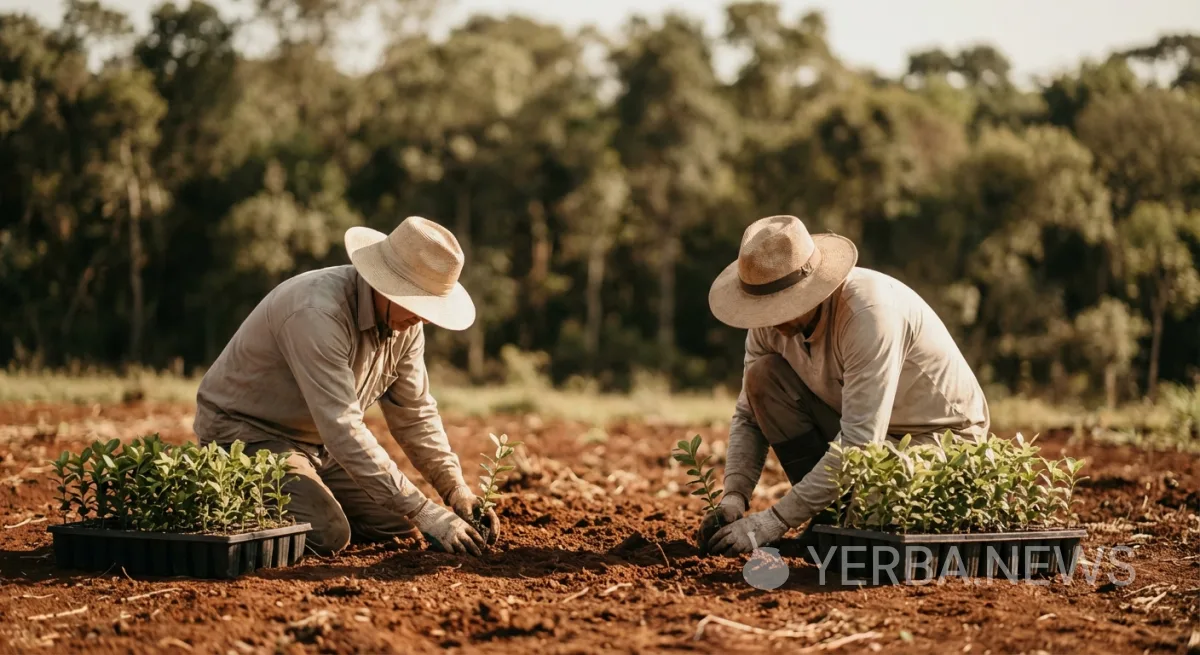
In the subtropical forests of eastern Paraguay, a large-scale reforestation initiative is turning to one of South America's most culturally significant plants as both an ecological restoration tool and a vehicle for rural poverty reduction. The PROEZA project — an acronym for Poverty, Reforestation, Energy and Climate Change — is a collaboration between the Food and Agriculture Organization of the United Nations (FAO) and the Green Climate Fund (GCF) that places yerba mate at the center of a landscape-level recovery strategy.
Ancestral Knowledge Meets Climate Finance
Paraguay sits within the native range of Ilex paraguariensis, where wild yerba mate has been harvested by Guaraní communities for centuries. However, decades of deforestation driven by cattle ranching and soy cultivation have dramatically reduced the availability of wild yerba mate leaves. The PROEZA project addresses this by financing the establishment of yerba mate nurseries and replanting programs that draw on traditional agroforestry techniques preserved by Indigenous practitioners.
Seedlings planted during the project's initial phase in May 2022 are now approaching commercial viability, with the first harvest anticipated in 2026. Unlike conventional monoculture plantations, the PROEZA model integrates yerba mate into mixed-species forest plots, ensuring that the replanted areas simultaneously deliver carbon sequestration, biodiversity habitat, and income generation for participating families.
A Dual Mandate: Climate and Livelihoods
The project's dual mandate — environmental restoration and poverty alleviation — reflects the economic reality of rural eastern Paraguay, where smallholder families often lack viable alternatives to environmentally destructive land uses. By providing seedlings, technical assistance, and guaranteed market access, PROEZA aims to demonstrate that regenerative agriculture can compete economically with extractive models.
The FAO has cited the project as a model for integrating traditional ecological knowledge into climate adaptation strategies financed by international mechanisms. If the 2026 harvest meets production targets, PROEZA planners intend to scale the model across additional departments in Paraguay's Atlantic Forest region, potentially restoring thousands of hectares of degraded land while establishing a nationally significant supply of sustainably cultivated yerba mate.