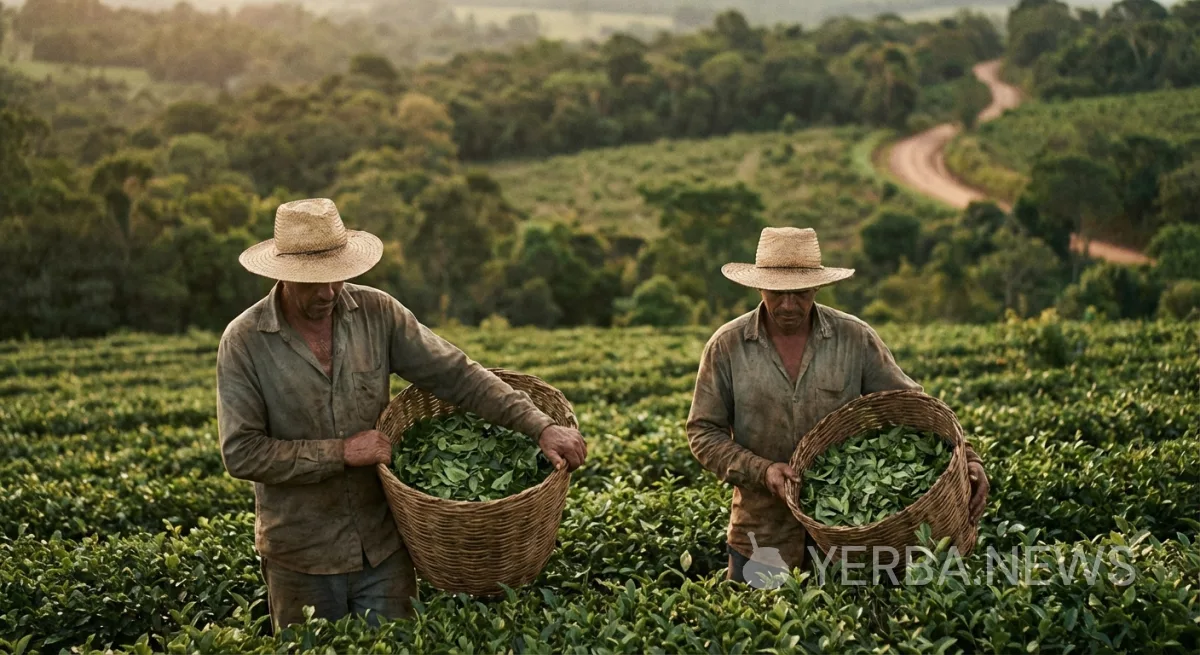
In eastern Paraguay's department of Itapúa, a cooperative called the Oñoirũ Association of Agroecological Agriculture has quietly assembled one of South America's most compelling models of smallholder-driven organic yerba mate production. The association — whose Guaraní name translates roughly as 'together' — comprises 134 families who cultivate Ilex paraguariensis using agroecological methods that reject synthetic inputs in favor of biological pest management, intercropping, and soil-building techniques passed down through generations.
Against the Soy Tide
To understand Oñoirũ's significance, it is necessary to understand the landscape it operates within. Eastern Paraguay has been dramatically reshaped by the expansion of mechanized soybean cultivation, much of it driven by Brazilian-born farmers (known as 'Brasiguayos') who introduced industrial-scale monoculture to Paraguay's fertile soils. Today, soy occupies more than 3.5 million hectares in Paraguay — an area larger than Belgium — and its expansion has been a primary driver of deforestation, land concentration, and the displacement of smallholder communities. The Oñoirũ families represent those who refused to sell their land or adopt the soy model, choosing instead to build livelihoods around crops with deeper cultural roots and lower ecological footprints.
The Certification Challenge
Achieving organic certification in Paraguay is neither cheap nor straightforward, particularly for smallholders with limited access to capital and technical assistance. The Oñoirũ cooperative has navigated this challenge through collective action: pooling resources for third-party certification audits, developing internal quality control systems, and establishing direct relationships with international buyers who pay premium prices for verified organic product. The cooperative's yerba mate is sold both domestically and in European and North American markets, where demand for ethically sourced, certifiably organic yerba mate has grown steadily.
A Model for Replication
Paraguay sits within the native range of Ilex paraguariensis — Guaraní communities have harvested wild yerba mate in these forests for centuries — giving the country a natural advantage in producing yerba mate with authentic terroir and minimal environmental disruption. Yet Paraguay accounts for only a small fraction of global yerba mate production, dwarfed by Argentina and Brazil. The Oñoirũ model suggests a pathway for scaling Paraguayan output without replicating the plantation monoculture approach that dominates in its larger neighbors.
International development organizations, including those affiliated with ICCROM and the FAO's PROEZA project in the same region, have cited the Oñoirũ experience as evidence that agroecological yerba mate can be economically competitive while delivering co-benefits in biodiversity conservation, carbon sequestration, and rural poverty reduction. For the 134 families of the cooperative, the equation is simpler: yerba mate is the crop that allows them to stay on their land, maintain their traditions, and participate in the global economy on their own terms.