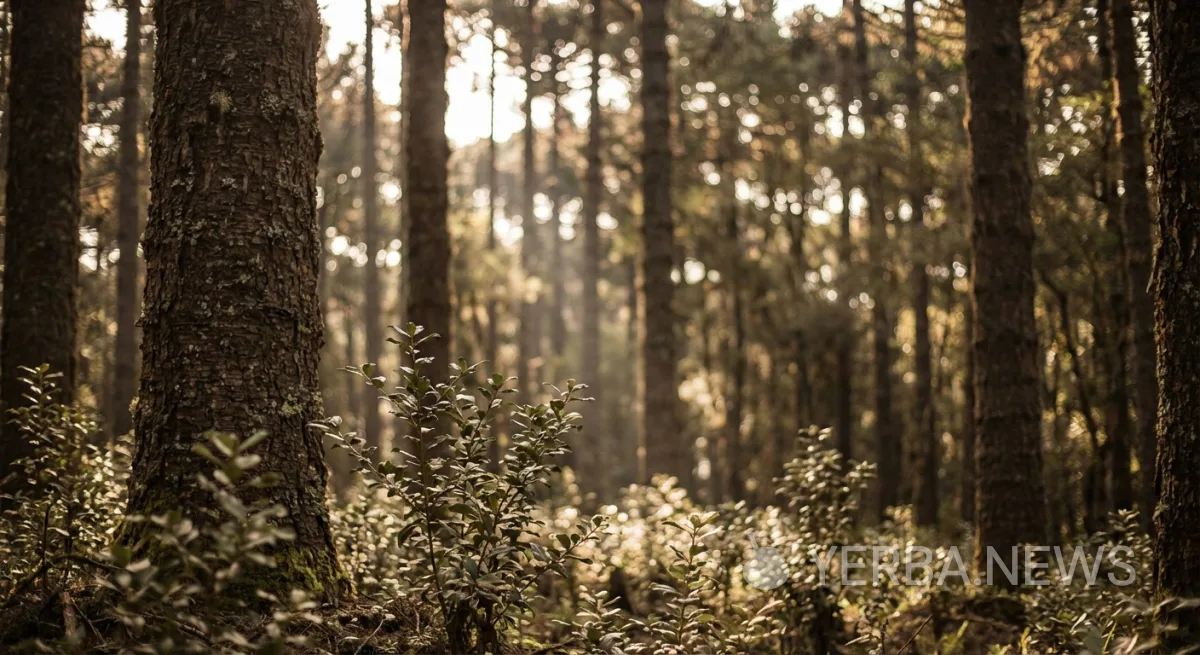
In May 2025, the Food and Agriculture Organization of the United Nations formally designated Brazil's traditional shade-grown erva-mate agroforestry system as a Globally Important Agricultural Heritage System (GIAHS) — a distinction reserved for living landscapes where agricultural practices, biodiversity, and cultural traditions form an interdependent whole. The designation, confirmed during the GIAHS Scientific Advisory Group meeting held May 19–21, 2025, makes the Paraná system only the second in Brazil to receive the recognition.
A Forest That Feeds and Sustains
The designated system, formally titled 'Shade-grown Erva-mate: a Traditional Agroforestry System in Paraná's Araucaria Forest,' encompasses centuries-old cultivation practices in which Ilex paraguariensis is grown beneath the canopy of native Araucaria angustifolia trees rather than in cleared monoculture plantations. The Araucaria Forest — a subtype of Brazil's critically threatened Atlantic Forest — has been reduced to approximately 1% of its original extent, making this integrated farming approach both an ecological lifeline and a cultural archive.
Indigenous peoples and local communities in southern Brazil have practiced this agroforestry model for generations, blending erva-mate cultivation with the harvest of native fruits (such as pinhão, the Araucaria seed), medicinal plants, and forest timber products. The resulting multi-layered canopy structure serves as habitat for endemic species, sequesters carbon at rates comparable to undisturbed forest, and provides smallholder families with diversified income streams that reduce dependence on any single commodity.
What GIAHS Recognition Means
The GIAHS designation does not impose binding conservation rules; instead, it provides international visibility, technical support, and access to conservation-linked funding mechanisms. For the Paraná erva-mate system, the designation validates what practitioners have long argued: that shade-grown production is not a compromise between ecology and economics but an optimization of both. The FAO has noted that the system exemplifies how agricultural heritage can serve as a model for climate adaptation, food sovereignty, and biodiversity preservation in rapidly changing landscapes.
Economic and Ecological Dimensions
Paraná is Brazil's leading erva-mate producing state, and the shade-grown system accounts for a meaningful share of total output. Studies conducted by Brazilian agricultural research institutions have demonstrated that shade-grown erva-mate achieves a negative carbon balance — absorbing more CO₂ through canopy photosynthesis than the entire cultivation cycle releases — a finding that positions the product as a credible entrant in voluntary carbon markets. The formal award ceremony for the new GIAHS designations is scheduled for October 31, 2025, at FAO headquarters in Rome.