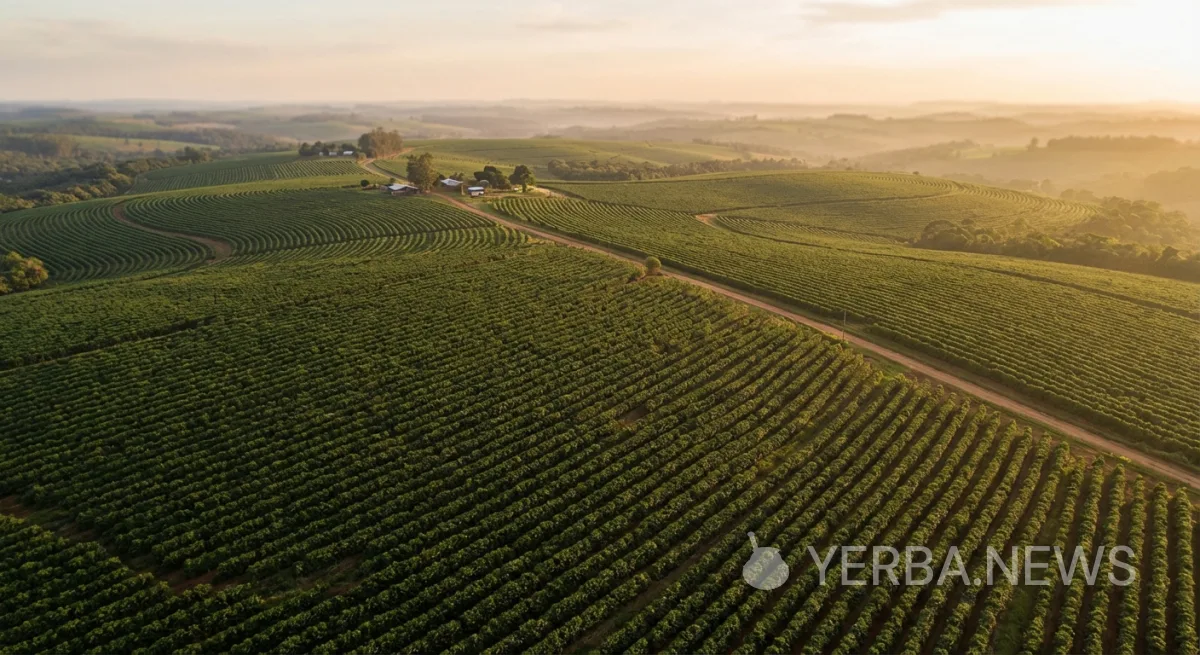
Argentina's yerba mate sector produced approximately 1.1 million metric tons of green leaf in 2024, according to data released by the Instituto Nacional de la Yerba Mate (INYM). The figure represents a 27% increase over 2023 levels and marks the highest annual production volume since at least 2019, confirming Argentina's position as the world's largest yerba mate producer. Yet this record harvest has coincided with the deepest economic distress the sector's farming base has experienced in two decades.
Exports Reach Historic Highs
On the demand side, exports surged to a record exceeding 44 million kilograms in 2024 — driven primarily by sustained demand from Syria, Lebanon, and other Middle Eastern markets that collectively absorb the majority of Argentine yerba mate exports. Domestic consumption, however, has contracted modestly as inflationary pressures and macroeconomic instability dampen household purchasing power. The net result is a structural oversupply that has depressed farmgate prices to levels well below production costs.
The Supply Response
In response, a significant share of producers have signaled plans to reduce their 2025 harvest by approximately 20%, either by delaying pruning cycles or foregoing collection on marginal plots. INYM officials anticipate that this natural correction — combined with climatic variability — will help rebalance supply and demand over the 2025-2026 period. However, industry analysts caution that the delayed effects of underinvestment in crop maintenance could create a supply deficit in subsequent seasons.
The 2024 production data also reveals a notable concentration trend: large-scale operations in Corrientes province increased their share of total output, while smallholder producers in Misiones — who represent the numerical majority of the sector — saw stagnant or declining yields per hectare. This divergence raises questions about the long-term structural composition of Argentina's yerba mate farming base and the viability of the family-farm model that has historically defined the sector.