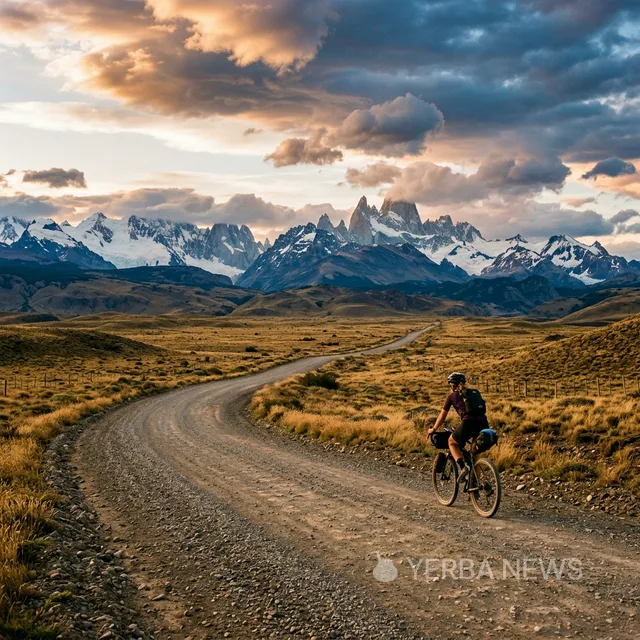
When Chilean ultracyclist Sofía Araya crossed the finish line of the 2025 Across Patagonia race — 1,800 kilometers of gravel, wind, and altitude completed in 6 days, 14 hours, and 22 minutes — the first thing she reached for was not a recovery shake or a celebratory beer. It was her mate gourd. Tucked into a custom frame bag alongside her spare tubes and emergency bivvy, the gourd had been her constant companion for every kilometer of the race. She had consumed an estimated 15 liters of mate during the event, prepared at rest stops using a compact gas stove strapped to her handlebar bag.
Araya's finish — which set a new women's course record by over nine hours — brought mainstream attention to a trend that has been building quietly in the ultra-endurance cycling community for several years. At races like the Tour Divide, the Atlas Mountain Race, and the Silk Road Mountain Race, mate has moved from curiosity to genuine competitive tool, adopted by riders seeking an alternative to the gastrointestinal distress that conventional high-sugar energy products inevitably cause over multi-day efforts.
The Endurance Advantage
The physiological argument for mate in ultra-endurance contexts is compelling. Dr. Alejandra Muñoz, a sports physiologist at the Universidad de Chile who has worked with Araya and other elite endurance athletes, explains that mate addresses several challenges simultaneously. "In events lasting multiple days, the primary nutritional challenge is not energy per se — riders can consume enough calories from solid food. The challenge is maintaining cognitive function, managing inflammation, and sustaining the gastrointestinal system under extreme stress."
Mate's caffeine delivery profile — gradual onset, sustained plateau, gentle decline — is better suited to 18-hour riding days than the sharp spikes and crashes produced by coffee or caffeine tablets. Its anti-inflammatory polyphenols help manage the cumulative tissue damage that causes progressive performance decline in multi-day events. And critically, unlike energy gels and concentrated carbohydrate drinks, mate does not contribute to the gut motility problems that force many ultra-endurance athletes to abandon races.
Practical Innovations
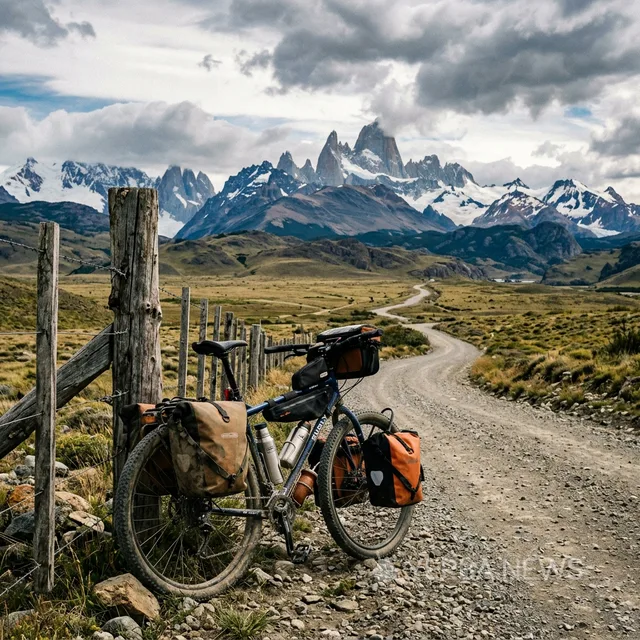
The biggest objection was always logistical: how do you prepare mate on a bicycle? The answer turned out to be simpler than anyone expected. A 500ml thermos fits in a standard bottle cage. Pre-loaded gourds in sealed bags go in a frame bag. You stop every three hours anyway to eat — adding a mate preparation takes four minutes.
— Sofía Araya, ultra-endurance cyclist and Across Patagonia record holder
Equipment manufacturers have begun to respond. Apidura, the British bikepacking bag company, now offers a "Mate Kit" sleeve designed to insulate a thermos within its frame bag system. Argentinean startup CiclaMate has developed a cycling-specific bombilla with a built-in filter finer than traditional models, preventing clogging from the vibration-loosened yerba dust that plagued early adopters.
The competitive results speak for themselves. Of the top ten finishers in the 2025 Atlas Mountain Race across Morocco, four reported regular mate consumption during the event. In the self-supported category of the Tour Divide — arguably the world's most prestigious ultra-endurance cycling event — the practice is now common enough that race organizers have added yerba mate to the list of supplies available at designated resupply towns along the route.