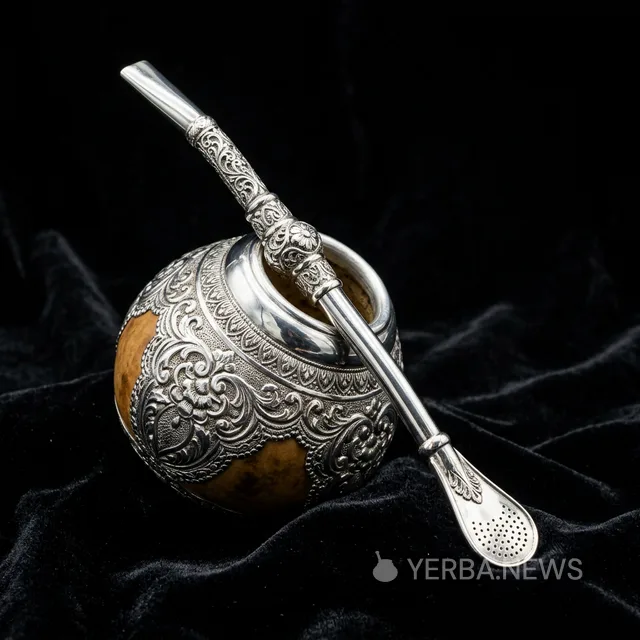
In a whitewashed workshop on the outskirts of San Antonio de Areco — the town that considers itself the spiritual capital of Argentine gaucho culture — master silversmith Raúl Draghi is putting the final chasing marks on a bombilla that will retail for $1,800. The metal straw, hand-forged from 925 sterling silver over 60 hours of work, features a filtration screen perforated with 200 individually drilled holes, each precisely 0.8 millimeters in diameter. The handle is wrapped in braided rawhide from grass-fed cattle. It is, by any conventional measure, an absurd object. It is also sold out through March 2027.
The luxury yerba mate accessories market — a category that barely existed a decade ago — has emerged as one of the most dynamic niches in the global luxury goods landscape. Estimated at $120 million annually by Bain & Company's 2025 luxury market report, the segment is growing at 28 percent year-over-year, outpacing established luxury categories like fine writing instruments and luxury tableware.
From Utility to Object of Desire
The transformation of mate accessories from utilitarian implements to collectible art objects mirrors patterns seen in other traditional craft categories — Japanese ceramics, Scandinavian glassware, artisanal knife-making — where the confluence of cultural authenticity, handcraft scarcity, and social media visibility has created markets for objects that transcend their functional purpose.
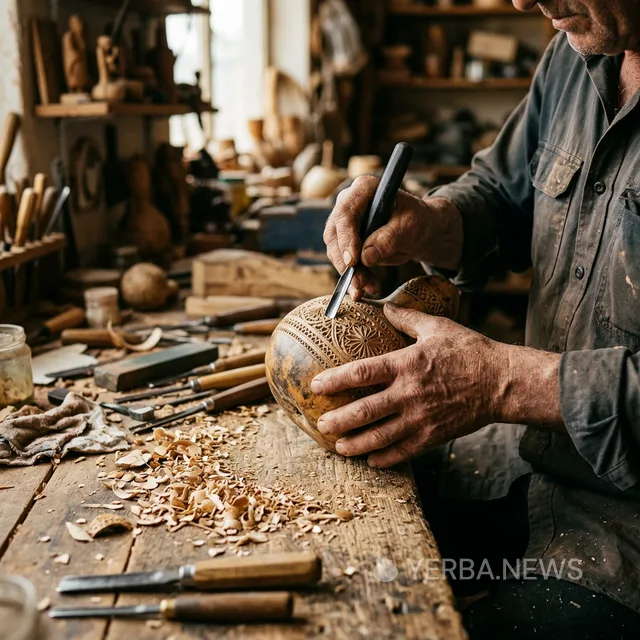
At the apex of the market sit makers like Draghi, whose family has been working silver in Areco since 1934, and Buenos Aires-based studio Hernán Herdez, whose carved calabash gourds — featuring intricate bas-relief scenes of Patagonian landscapes — command prices between $2,000 and $4,000. Herdez produces only 40 gourds per year, each requiring three months of work. His waiting list currently exceeds 200 names, including several prominent European collectors who display the gourds as sculpture rather than drinking vessels.
European Luxury Houses Enter the Market
The opportunity has not escaped the attention of established luxury brands. Italian leather goods house Bottega Veneta introduced a mate carry case in its Fall 2025 collection — a woven intrecciato leather cylinder designed to hold a gourd, bombilla, and thermos. Priced at €1,500, it sold out within 48 hours of release. Christofle, the French silversmith, has commissioned a limited-edition bombilla collection in collaboration with Argentine designer Cristián Mohaded, with pieces starting at €800.
The mate ritual is inherently tactile — the warmth of the gourd in your hands, the weight of the bombilla, the texture of the yerba. Luxury responds to that sensory richness. People who appreciate fine materials and craftsmanship recognize in mate an object worthy of their attention.
— Cristián Mohaded, Argentine-Italian industrial designer
Critics within the mate community have expressed ambivalence about the luxurification of what has historically been a profoundly egalitarian tradition — a beverage shared equally between the wealthy estanciero and the poorest peón. In Buenos Aires, the sight of a $3,000 gourd at a polo match sits uneasily beside the reality that the tareferos who harvest the yerba earn approximately $12 per day. The tension between mate's democratic ethos and its newfound luxury cachet may prove to be one of the more interesting cultural negotiations of the coming decade.