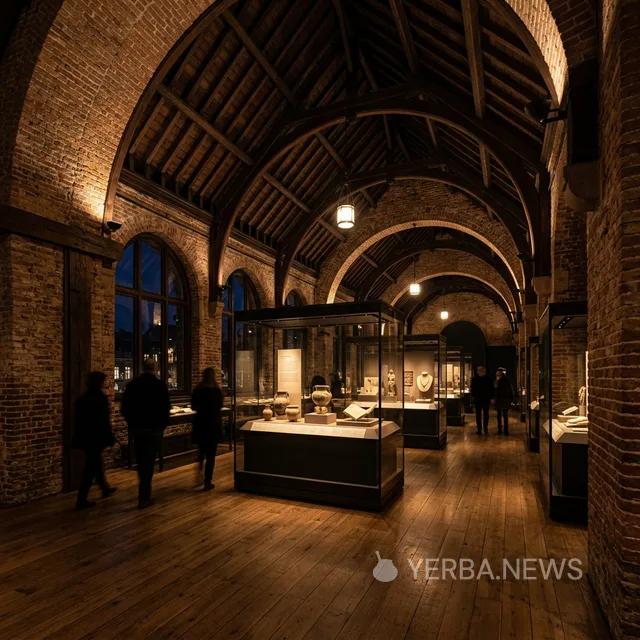
On a cobblestoned side street in Buenos Aires's atmospheric San Telmo district — the neighborhood of milongas, antique markets, and carefully preserved 19th-century architecture — a 2,400-square-meter warehouse that once stored hides for export has been transformed into the Museo del Mate, the world's first institution dedicated exclusively to the cultural, social, and material history of yerba mate. The museum, which opened in December 2025 after three years of development, has already received over 45,000 visitors and been shortlisted for the European Museum of the Year Award — an unusual honor for a non-European institution, reflecting the jury's assessment that the museum represents "curatorial innovation of the highest order."
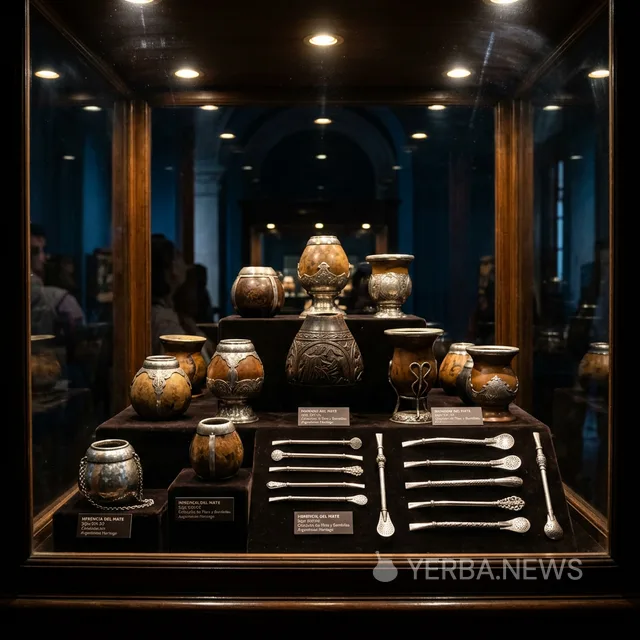
The collection comprises more than 4,000 objects spanning five centuries and three continents. From pre-Columbian Guaraní ceramic vessels used for the earliest known mate consumption to a 3D-printed titanium bombilla designed by a student at MIT's Media Lab, the museum tells the story of a beverage that has both shaped and been shaped by every major cultural transformation in South American history.
Curating the Everyday
The museum's founding director, cultural historian Dr. Magdalena Ríos, conceived the institution as a response to what she perceived as a gap in how South American material culture is presented to the world. "Our great museums are filled with the extraordinary — pre-Columbian gold, colonial silver, revolutionary swords," she explains. "But the most important objects in any culture are the ones that are used every day. The mate gourd is the most intimate, most continuously used object in Argentine domestic life. It deserved a palace."
The exhibition is organized not chronologically but thematically, across seven interconnected galleries. "Origin" traces the botanical and ethnographic roots of mate consumption among the Guaraní and Kaingang peoples. "Power" examines how the Jesuit missions of the 17th and 18th centuries industrialized mate production, creating one of the earliest examples of plantation agriculture in the Americas. "Revolution" documents mate's role in the independence movements — the beverage that sustained armies and cemented bonds between commanders and foot soldiers.
Every object in this museum has been touched by human hands in an act of ordinary intimacy. That bombilla from 1843 was held between someone's lips ten thousand times. That gourd carries the residue of a thousand conversations. Museums typically acquire objects for their rarity. We acquire them for their frequency of use.
— Dr. Magdalena Ríos, Founding Director, Museo del Mate
Architecture of Memory
The warehouse conversion, designed by Buenos Aires studio Adamo-Faiden, is itself a masterwork of adaptive reuse. The original iron-and-brick industrial structure has been left largely intact, with new interventions executed in raw concrete and blackened steel that provide deliberate contrast. Natural light enters through a newly cut central oculus — a circular skylight that casts a shifting disc of sunlight across the main exhibition hall throughout the day, referencing the circular form of the mate gourd itself.
The most emotionally charged gallery — "Everyday" — presents 500 mate gourds donated by ordinary Argentine families, each accompanied by a recorded oral history describing the role of that particular gourd in the donor's family life. A gourd used by a grandmother who survived the dictatorship. A gourd carried by a soldier to the Malvinas. A gourd shared daily for 40 years between a married couple who could agree on nothing else. Visitors frequently need time to compose themselves before proceeding.
For a country that has sometimes struggled to articulate its cultural identity to the wider world — overshadowed by tango's glamour and football's spectacle — the Museo del Mate makes a quiet but powerful argument. The most authentic expression of Argentine culture is not a dance or a sport but a daily act of care: heating the water, packing the gourd, offering the first sip to a friend. In giving that act a museum, Buenos Aires has given it the reverence it has always deserved.