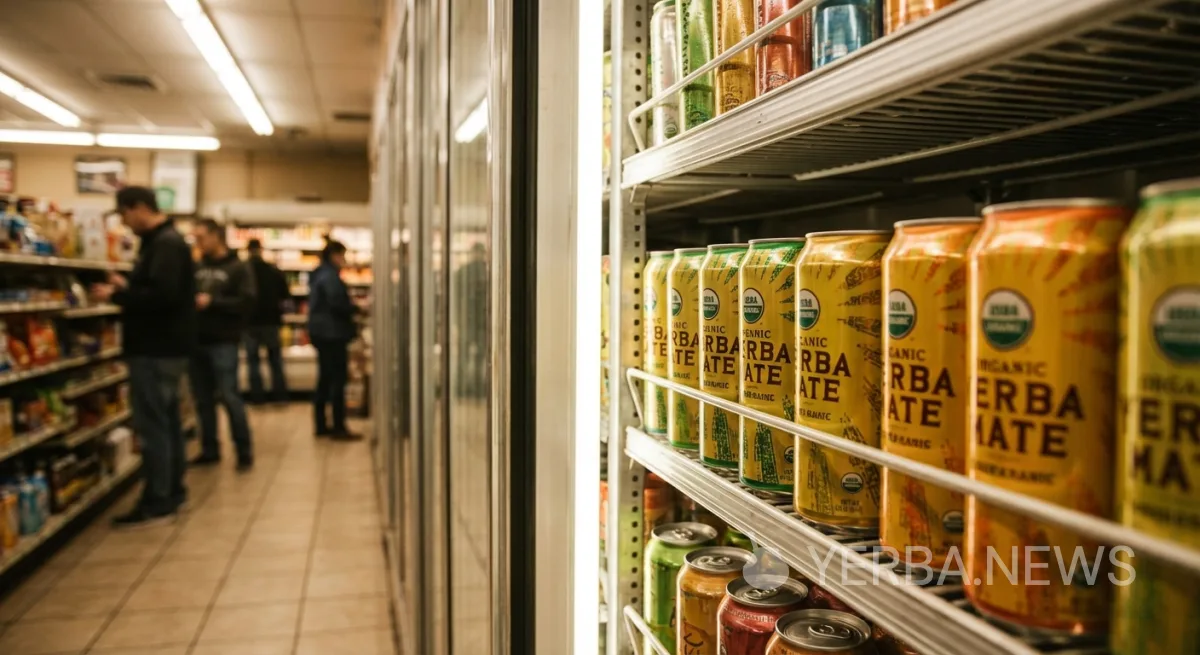
In May 2025, CLEAN Cause — the Austin, Texas-based organic yerba mate brand built around a social mission of supporting addiction recovery — launched its products in 678 7-Eleven stores across Texas, California, and Oregon. As reported by BevNET, the expansion represents one of the largest single-retailer additions in the brand's history and places its cans in the same cooler door where Red Bull, Monster, and Celsius compete for the attention of convenience-store consumers.
The Give-Back Model
CLEAN Cause's business model is structured around an unusually aggressive charitable commitment: the company donates 50% of net profits, or 5% of net sales — whichever is greater — to support individuals in recovery from alcohol and drug addiction. According to the company's website, this commitment has generated over $3.9 million in donations to date. The 'whichever is greater' clause is significant: it means that even in years when the company is not profitable (a common situation for scaling CPG brands), the donation flow continues based on revenue, not earnings.
Evolving the Foundation
The CLEAN Cause Foundation (CCF) — the 501(c)(3) non-profit that administers the give-back program — is undergoing a strategic evolution. It is transitioning to operating as Cause CHANGE Collaborative (CCC), a shift that reflects a move from directly providing recovery housing scholarships to addressing systemic challenges within the recovery housing system of care. The Collaborative will focus on research, systems building, and policy change across the recovery housing community — a approach designed for broader, systems-level impact rather than individual-level assistance.
Category Implications
CLEAN Cause's 7-Eleven placement illustrates a broader trend: yerba mate brands are no longer content with natural grocery distribution and are aggressively pursuing the convenience channel, where volume and velocity are significantly higher. Alongside Drink Weird (which has surpassed 10,000 C-store doors through Anheuser-Busch distribution partnerships) and Yerba Madre (which launched convenience-store exclusive flavors in early 2026), CLEAN Cause's 7-Eleven entry means that three distinct yerba mate brands are now competing in the convenience cooler — a channel that was virtually empty of yerba mate products as recently as 2022.
For the recovery mission, each additional store adds not just revenue but awareness. Every can of CLEAN Cause sold in a 7-Eleven carries the brand's recovery messaging on its packaging — creating millions of micro-impressions about addiction recovery in a retail context where consumers rarely encounter messaging about behavioral health. Whether this exposure translates into reduced stigma or increased treatment-seeking behavior is an open question, but the scale of the distribution network ensures that the message reaches demographics that traditional public-health campaigns often miss.