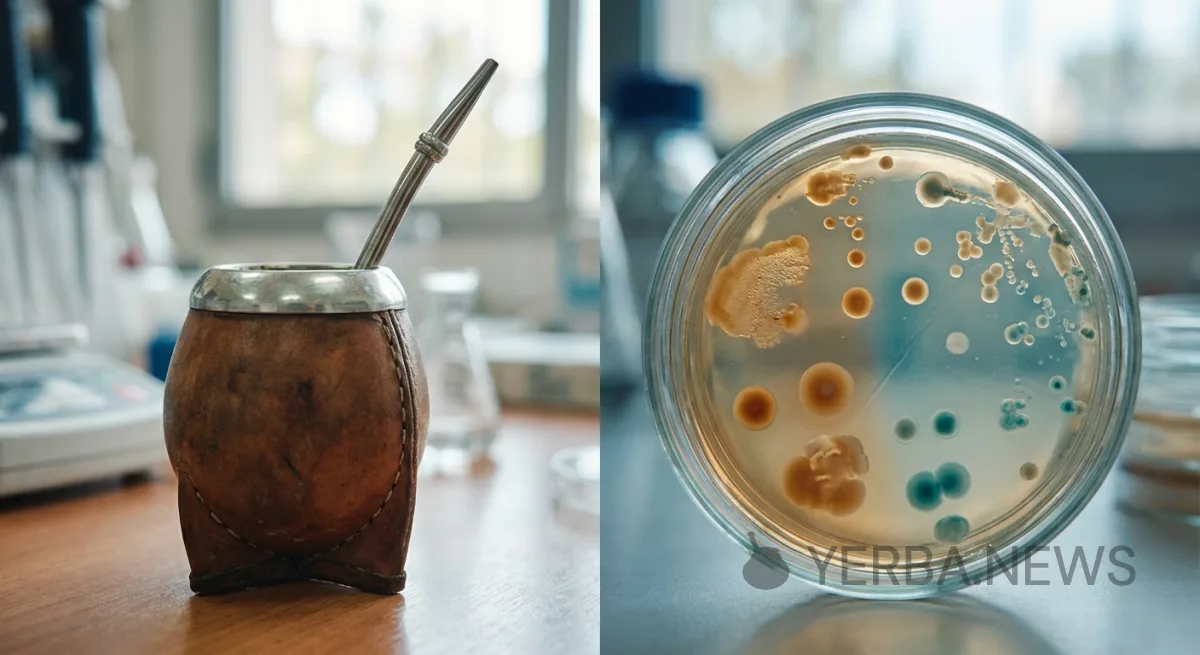
In a country where 85% of adults drink yerba mate daily and per-capita consumption reaches approximately 10 kilograms per year, the question of how this habit shapes oral biology is not academic — it is a public health consideration of national scale. A study published in February 2025 by researchers at Uruguay's Institut Pasteur de Montevideo and the Universidad Católica del Uruguay provides the first systematic characterization of how chronic yerba mate exposure influences the composition of the salivary microbiome.
Study Design and Methods
The research team collected saliva samples from a cohort of regular yerba mate consumers and a comparison group of non-consumers, all recruited from the Montevideo metropolitan area. Using 16S rRNA gene sequencing — the standard methodology for profiling bacterial community composition — the investigators characterized the relative abundance and diversity of microbial taxa in each participant's oral environment. The choice of Uruguay as a study site was deliberate: the country's extraordinarily high mate consumption rate, combined with relatively homogeneous dietary patterns, provides a natural quasi-experimental setting for isolating the effects of a single dietary variable.
Key Findings: More Diversity, Fewer Pathogens
The results revealed that yerba mate consumers harbored significantly greater microbial diversity and species richness in their saliva compared to non-consumers. In microbial ecology, diversity is generally considered a marker of ecosystem health and resilience — a principle that holds in the oral cavity, where diverse communities tend to resist colonization by pathogenic species. While both groups showed an abundance of Streptococcus bacteria (which is expected, as Streptococcus is the dominant genus in human saliva), a notable difference emerged at the species level: Streptococcus oralis, a subtype that has been linked to less favorable oral conditions, was slightly more prevalent in the non-consumer group.
Mechanisms: Polyphenols and Antimicrobial Compounds
The researchers propose that the observed differences are driven by the bioactive compounds in Ilex paraguariensis, particularly its polyphenols (chlorogenic acid, caffeoylquinic acids) and saponins. These compounds have well-documented antimicrobial properties: previous in vitro studies have demonstrated that yerba mate extracts can inhibit the growth of cariogenic bacteria such as Streptococcus mutans and periodontal pathogens like Porphyromonas gingivalis. By selectively suppressing pathogenic species while leaving commensal bacteria intact, regular mate consumption may effectively 'garden' the oral microbiome toward a more balanced and resilient configuration.
Implications and Limitations
The authors characterize their findings as observational and caution against causal claims: the cross-sectional design cannot establish whether mate consumption drives the microbiome differences or whether shared lifestyle factors among mate drinkers contribute to the observed patterns. They call for longitudinal intervention studies — ideally randomized trials in which non-consumers are assigned to begin regular mate consumption — to establish causality and quantify the dose-response relationship. Nevertheless, the study contributes to a growing body of evidence suggesting that traditional dietary practices may confer health benefits through microbiome modulation, a mechanism that was largely invisible to previous generations of researchers.