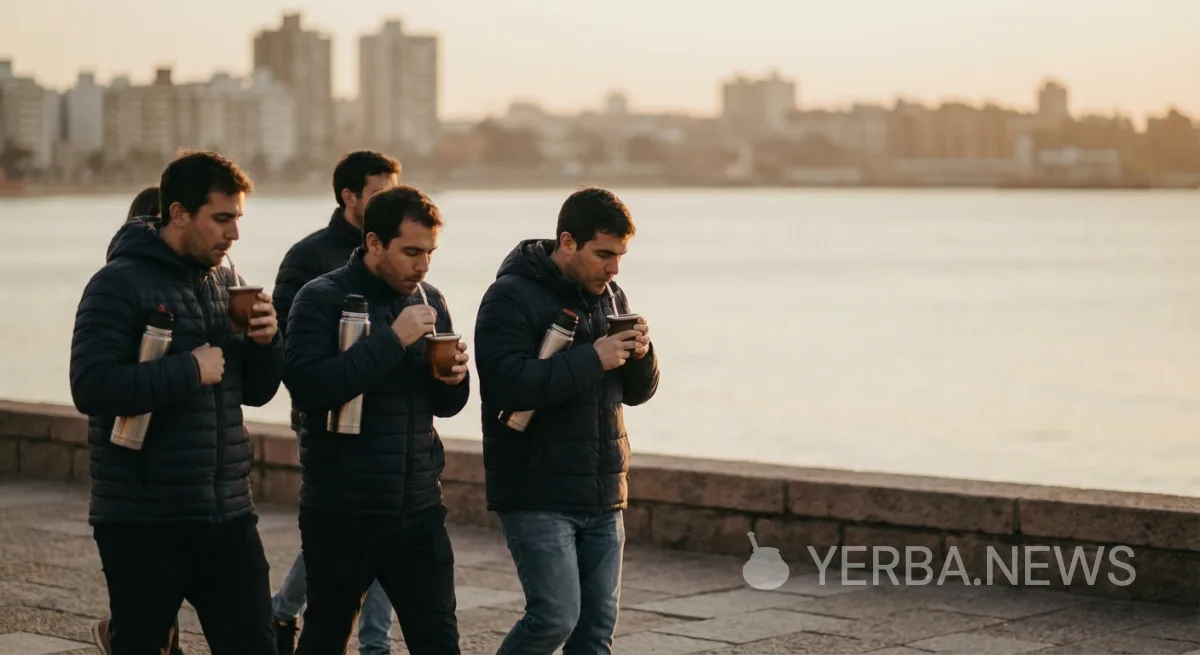
Walk through any Uruguayan city — Montevideo, Salto, Paysandú, Maldonado — at any hour, and the national habit is visible everywhere: professionals commuting with thermoses clamped under one arm, students passing gourds between classes, taxi drivers with bombillas propped in cup holders, pensioners circling a shared mate on park benches. With approximately 85% of adults drinking mate daily and per-capita consumption averaging around 10 kilograms of dry yerba per year, Uruguay consumes more mate per person than any other country on Earth — surpassing even Argentina, the far larger producer and cultural rival.
The Numbers Behind the Ritual
According to data compiled by Forbes Uruguay and the Uruguayan trade information service Debate.com.uy, the country moves approximately 30 million kilograms of yerba mate annually, generating a domestic market valued at roughly US$142 million. This volume is consumed by a population of just 3.5 million — a ratio that produces the per-capita figure that sets Uruguay apart from every other nation in the mate-drinking world.
A Consumer Nation, Not a Producer
What makes Uruguay's position unique in the global yerba mate economy is that it is overwhelmingly a consumer, not a producer. Approximately 95% of the yerba mate consumed in Uruguay is imported from Brazil, with the southern Brazilian states of Paraná, Santa Catarina, and Rio Grande do Sul serving as the primary supply base. Uruguay lacks the subtropical climate and acidic soils optimal for large-scale Ilex paraguariensis cultivation, and historical attempts to establish domestic plantations have not achieved commercial viability. The result is a commodity dependency of unusual intensity: a beverage so central to national identity that Uruguay cannot produce it in meaningful quantities.
Cultural Infrastructure: Hot Water on Demand
Uruguay's commitment to mate is embedded in its public and commercial infrastructure in ways that surprise outsiders. Gas stations across the country maintain hot-water dispensers for thermos refills — a service so routine that it requires no payment and no explanation. Workplaces allocate time for mate breaks. Public parks feature designated 'mate areas' with electrical outlets for heating water. Designer thermos brands (Termolar, Stanley) and artisan gourd makers constitute a significant retail category. The cultural infrastructure around mate consumption is so comprehensive that it functions as an invisible utility — always available, never questioned, and entirely specific to Uruguay.
Evolving Tastes: Flavored and Soft Blends
Market trends for 2025 indicate an evolution in Uruguayan mate preferences. Forbes Uruguay reports growing demand for flavored and 'suave' (soft) yerba blends — milder formulations that contain less stems (palos) and finer leaf cuts. While traditional consumers remain loyal to the strong, bitter profiles that characterized Uruguayan mate for decades, younger consumers are increasingly gravitating toward varieties infused with herbs (menta-cedrón, boldo), citrus, or berries. The market remains remarkably stable year-round, unlike seasonal beverages in other cultures: mate is consumed equally in January's 35°C summer heat and July's 5°C winter mornings.
Mate is not a drink in Uruguay. It is a companion. You carry it everywhere like you carry your phone. It is the first thing you prepare in the morning and the last thing you share before bed.
— Uruguayan cultural observation, Abstracta.us, 2024