
For a nation that consumes an average of 6.4 kilograms of yerba mate per person per year — more than any other country by a factor of three — the product occupies a category beyond mere commodity. In Argentina, yerba mate is classified as a canasta básica item, part of the essential basket of goods whose price is tracked by INDEC, the national statistics agency, as a barometer of household economic health. When yerba mate prices rise, it is not simply a market fluctuation; it is a measure of national pain.
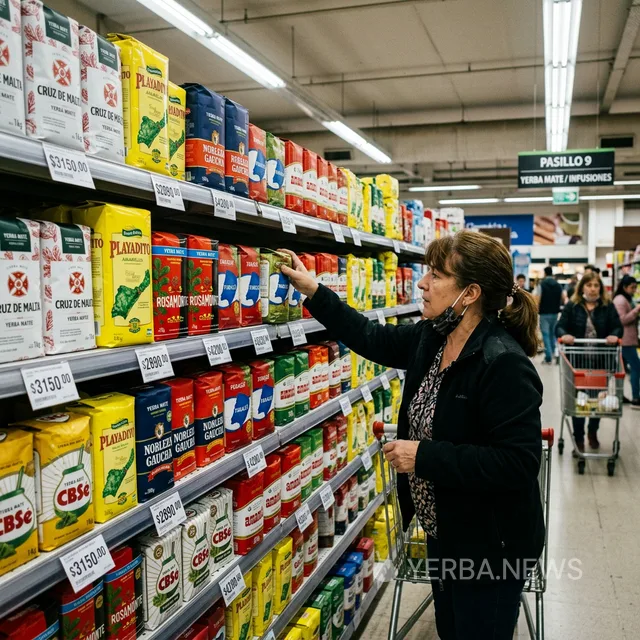
The pain, in 2026, is acute. Despite the Milei administration's broader success in reducing headline inflation from triple-digit peaks to approximately 38 percent annually, the price of yerba mate has risen by 67 percent in real terms over the past 18 months. A standard one-kilogram package of a mid-range brand like Rosamonte or Playadito now costs approximately 4,500 Argentine pesos — the equivalent of roughly $4.20 at current exchange rates, but representing a far greater proportion of household income for the average Argentine worker than equivalent figures suggest.
Structural Causes: Beyond Inflation
The price surge reflects a convergence of structural factors that go beyond general inflation. The removal of export taxes in late 2025, while celebrated by producers as a long-overdue liberalization, effectively exposed the domestic market to international price signals for the first time. With European and Asian buyers willing to pay substantial premiums for Argentine yerba mate, producers have rational incentives to redirect supply toward export markets — a dynamic that tightens domestic availability and pushes prices upward.
Simultaneously, production costs have risen sharply. Energy prices — critical for the sapecado and drying processes — have doubled following the government's reduction of utility subsidies. Transportation costs from the producing regions in the northeast to the major consumption centers of Buenos Aires, Rosario, and Córdoba have increased by 45 percent. And labor costs, while still low by international standards, have risen as agricultural workers demand wages that keep pace with the cost of living.
My grandmother would sooner have gone without bread than without yerba. I understand that sentiment — it is cultural, it is emotional, it is identity. But when you are choosing between yerba and your child's school supplies, the calculus becomes unbearable.
— Laura Giménez, 34, schoolteacher in Rosario
Consumer Adaptation
INDEC data for the first quarter of 2026 reveals that domestic yerba mate consumption has fallen to 5.1 kilograms per capita on an annualized basis — the lowest figure recorded since 1995 and a 20 percent decline from the 2019 peak of 6.4 kilograms. The decline is concentrated among lower-income households, where yerba mate purchasing has dropped by an estimated 31 percent, while upper-income households have maintained consumption levels largely unchanged.
Consumers are adapting in ways both pragmatic and poignant. Sales of "segunda marca" (second-tier) yerba mate brands have surged by 40 percent, as households trade down from premium products. Some consumers report reusing yerba leaves for multiple cebadas (servings), extracting every possible infusion from each measure — a practice that would have been considered unthinkable, even offensive, in the culture's traditional etiquette. Others have shifted to cheaper alternatives: coffee, which despite its own price increases remains less expensive per serving, and herbal infusions that can be locally foraged.
The political dimension is significant. Yerba mate prices have become a proxy for the broader debate about the social costs of Argentina's market-oriented economic reforms. Opposition politicians have seized on the issue, proposing export quotas and domestic price controls — measures that economists warn would distort the market but that enjoy substantial popular support in a country where the right to affordable mate is felt, if not codified, as something close to a social contract.