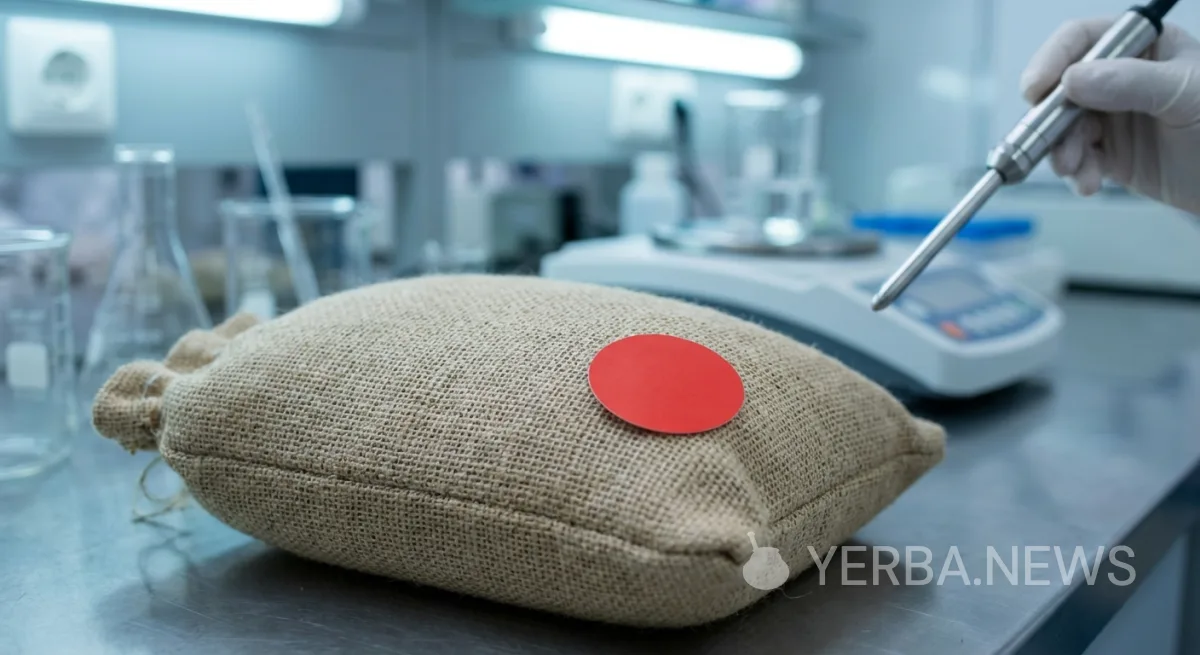
Reykjavík Public Health, in cooperation with Istanbul Market — a specialty food retailer at Grensásvegur 10, Reykjavík — issued a recall on August 11, 2025, for Piporé Yerba Mate tea (250g packages, best before December 31, 2025). Laboratory analysis determined that the product contained anthraquinone at levels exceeding the maximum residue limits (MRLs) established under EU Regulation No. 396/2005, which governs pesticide residues in food and feed products of plant and animal origin.
What Is Anthraquinone?
Anthraquinone is a chemical compound used primarily as an avian repellent and insecticide in agricultural applications, including seed treatments for corn and rice. In the context of yerba mate, however, its presence is not always attributable to direct pesticide application. Research published by MDPI and corroborated by NIH-indexed studies has established that anthraquinone can be introduced during the traditional processing of yerba mate — specifically during the 'sapecado' (scorching) and fire-drying phases, where green leaves are exposed to wood smoke. It can also form through the oxidation of anthracene, a polycyclic aromatic hydrocarbon naturally present in minute quantities in Ilex paraguariensis.
Regardless of origin, anthraquinone's regulatory status in the European Union is unambiguous. The European Commission classifies it as a potentially carcinogenic substance, and the EU's default MRL for anthraquinone in food products is set at 0.02 mg/kg (20 µg/kg) — one of the lowest thresholds applied to any pesticide residue. The German Federal Institute for Risk Assessment applies an even stricter standard of 0.01 mg/kg for certain imported products. Both the U.S. National Toxicology Program and California's Proposition 65 list have identified anthraquinone as a chemical known to cause cancer.
Not an Isolated Incident
The Piporé recall in Iceland is not the first instance of a yerba mate product being flagged for anthraquinone contamination in European markets. The Czech Agriculture and Food Inspection Authority (CAFIA) previously banned a yerba mate product that tested at 0.081 mg/kg — more than four times the EU MRL. Similarly, authorities in Malta have issued advisories against consuming specific batches of yerba mate due to elevated anthraquinone levels. In response, some Argentine producers — including Taragüi — have obtained anthraquinone-free certification for their export lines, using controlled drying processes that minimize exposure to combustion byproducts.
Consumer Advisory
Consumers who purchased the recalled 250g Piporé Yerba Mate at Istanbul Market in Reykjavík are advised not to consume the product and to return it to the store for a full refund. The recall applies exclusively to the specific batch identified through the Reykjavík Public Health inspection; other Piporé products sold in other markets are not necessarily affected. The incident underscores the importance of robust import testing regimes and highlights the ongoing challenge facing the yerba mate export industry: reconciling centuries-old artisanal processing methods with the stringent food safety standards of European regulatory frameworks.