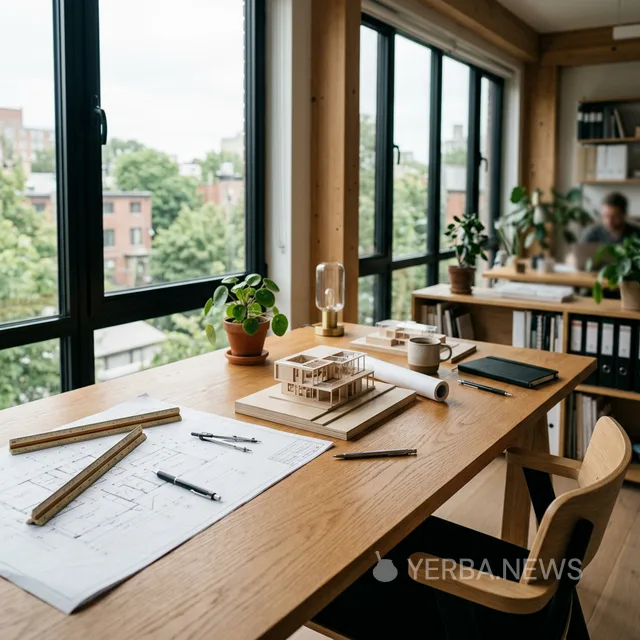
In the glass-walled studios of BIG (Bjarke Ingels Group) in Copenhagen, a curious ritual unfolds each morning that has nothing to do with Danish hygge or Scandinavian coffee culture. At precisely 9:15, a thermos of hot water appears on the central communal table alongside a hand-carved wooden gourd and a bag of Argentine yerba mate. Within minutes, a loose circle of architects, interns, and visiting collaborators forms around it. The gourd passes from hand to hand. Ideas follow.
"I discovered mate when we were working on a project in Buenos Aires in 2018," Ingels has said in interviews. "What immediately struck me was that it is the only beverage ritual I have encountered that is architecturally social by design. Coffee isolates — everyone has their own cup, their own moment. Mate circulates. It creates a geometry of attention that naturally becomes a design conversation."
The Creative Pharmacology
The connection between yerba mate and creative work has deeper roots than mere affectation. Neuroscientist Dr. Ingrid Svensson of the Karolinska Institute in Stockholm has studied the cognitive effects of various caffeinated beverages on creative performance. Her 2025 study, published in Frontiers in Human Neuroscience, found that mate consumption produced a distinctive pattern of brain activation markedly different from coffee.
Using functional MRI, Svensson's team observed that mate consumers showed heightened activity in the default mode network — the brain regions associated with daydreaming, imagination, and divergent thinking — while simultaneously maintaining activation in the executive control network responsible for focused problem-solving. This dual activation, which Svensson termed "alert reverie," is the neurological signature of creative flow states.
Coffee pushes you into a tunnel of focus. Mate opens the tunnel while keeping you inside it. For architects, who must simultaneously hold the grand vision and the structural detail, this is an extraordinarily useful cognitive state.
— Dr. Ingrid Svensson, Karolinska Institute
A Global Studio Phenomenon
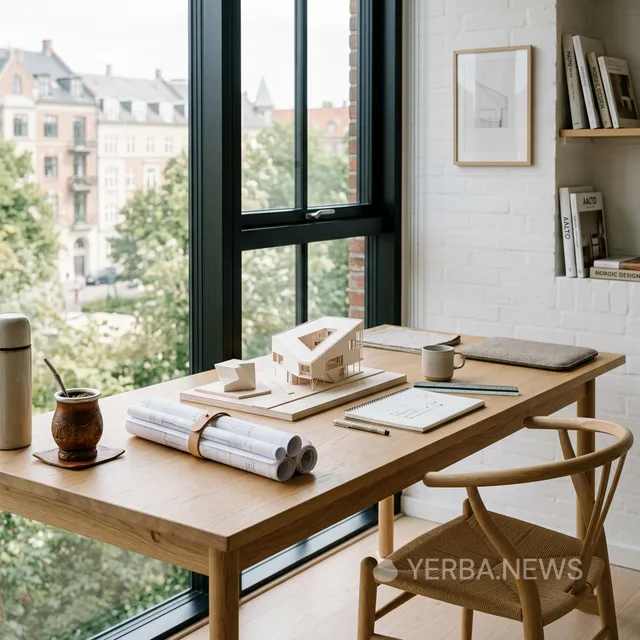
The practice has spread to architectural studios worldwide. Mexican architect Tatiana Bilbao, whose socially conscious housing projects have earned international recognition, describes mate as central to her collaborative design process. "In my studio, the ronda de mate is where we make our most important decisions," she says. "The ritual slows the conversation to a human pace. You cannot rush someone who is preparing mate. That patience transfers to the design work."
At Foster + Partners in London, the tradition arrived via Argentine staff members and has since been embraced by the broader studio. At MVRDV in Rotterdam, a dedicated "mate station" was installed during the office renovation in 2024. Even at the traditionally conservative Pritzker Prize jury, multiple jurors have been spotted with mate gourds during deliberations — a detail that the architecture press has noted with amusement and approval.
Whether the adoption of mate by elite architectural practices represents a genuine cognitive tool or an aesthetic performance of cosmopolitan taste is a question that architects themselves seem uninterested in resolving. For a profession built on the conviction that how you inhabit a space shapes what you create within it, the mate ritual may simply be the beverage equivalent of good design — form and function, indistinguishable.