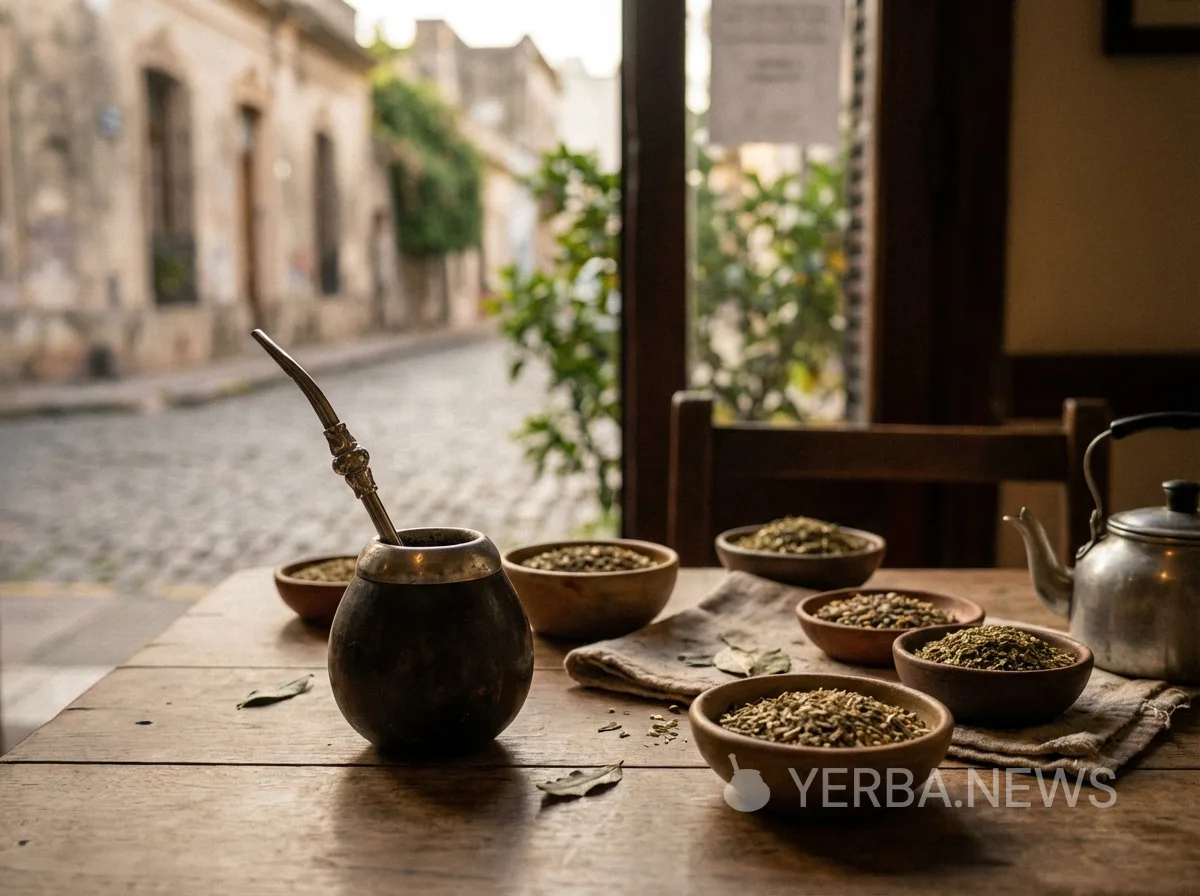
In a country where yerba mate is consumed with the unquestioning familiarity of breathing — Argentina drinks more than 100 liters per capita annually — the idea of applying rigorous sensory methodology to the national infusion borders on provocation. Yet this is precisely what Martín Gómez, a chemical engineer turned yerba mate sommelier, has dedicated his career to accomplishing. Through a combination of scientific training, cultural archaeology, and entrepreneurial persistence, Gómez has established an entirely new professional discipline: the systematic, standardized evaluation of yerba mate as a beverage worthy of the same analytical attention that wine, coffee, and whisky have received for decades.
From Laboratory to Mate Gourd
Gómez's trajectory from chemical engineering to yerba mate sommelier is less unlikely than it might initially appear. His scientific background — specifically his training in analytical chemistry and sensory evaluation methods — provided the technical framework necessary to deconstruct a beverage that most Argentines consume almost reflexively. His project, 'El Mate Perfecto' ('The Perfect Mate'), applies the same principles of controlled variable analysis that govern laboratory research to the variables that determine mate quality: terroir, cultivar selection, processing method, aging duration, water temperature, and infusion technique.
The result of this methodical approach was a realization that yerba mate — like wine — exhibits far greater flavor complexity than casual consumption reveals. Different growing regions in Misiones and Corrientes produce distinct flavor profiles. The ratio of leaves to stems alters bitterness and body. The aging process — traditionally conducted in natural air environments over 12 to 24 months — develops secondary aromatic compounds that can be systematically identified and categorized.
The Rueda Aromática de la Yerba Mate
Perhaps Gómez's most significant contribution to the field is the creation of the Rueda Aromática de la Yerba Mate® — a standardized aromatic wheel that provides a common vocabulary for describing yerba mate's sensory characteristics. Modeled conceptually on the aromatic wheels used in wine and coffee evaluation, the Rueda maps yerba mate's flavor and aroma spectrum across categories that include herbaceous, woody, toasted, smoky, fruity, and mineral notes. The tool enables trained evaluators to communicate tasting observations using consistent terminology — a prerequisite for any beverage category that aspires to professional-grade quality assessment.
The First Academy
In 2023, Gómez founded the Academia de Sommellerie de Yerba Mate in Córdoba — the first institution in the world dedicated to training professional yerba mate sommeliers. The curriculum combines agricultural science (cultivar identification, soil chemistry, climate impacts), processing technology (withering, sapecado firing, milling, aging), sensory analysis (using the Rueda Aromática methodology), and cultural history. Graduates are equipped to evaluate yerba mate products professionally, advise restaurants and retailers on selection, and contribute to quality improvement programs within the industry.
The academy represents an institutional formalization of knowledge that has historically existed only in informal, partially documented form. Argentina's yerba mate industry — despite its $2 billion-plus annual value — has historically lacked the professionalized tasting infrastructure that the coffee and wine industries built decades ago. Gómez's initiative addresses this gap at a moment when the global yerba mate market is expanding and international consumers are beginning to demand the same quality transparency they expect from specialty coffee and single-origin teas.
Myths, Truths, and Chamuyos
In September 2025, Gómez published 'La yerba mate: Mitos, verdades y chamuyos' — a book whose title translates roughly as 'Yerba Mate: Myths, Truths, and Tall Tales.' The 'chamuyo' — Argentine slang for persuasive nonsense — signals the author's intent to apply scientific rigor to claims that have circulated unchallenged in mate culture for generations. The book addresses questions that most Argentines have opinions about but rarely examine critically: Does the first mate taste different from the tenth? Does water temperature above 80°C truly destroy beneficial compounds? Is aged yerba inherently superior to fresh?
Gómez has also designed the sensory experience program at Buenos Aires' Museo del Mate, located on Avenida de Mayo — one of the capital's most historically significant boulevards. The museum experience includes guided historical tours, a dedicated matebar, a traditional pulpería setting, and structured tasting sessions that introduce visitors to the sensory dimensions of yerba mate they may have been drinking their entire lives without consciously perceiving. For a beverage so deeply embedded in daily routine that it has become culturally invisible, the act of paying deliberate attention to its flavor may be the most radical thing Gómez proposes.