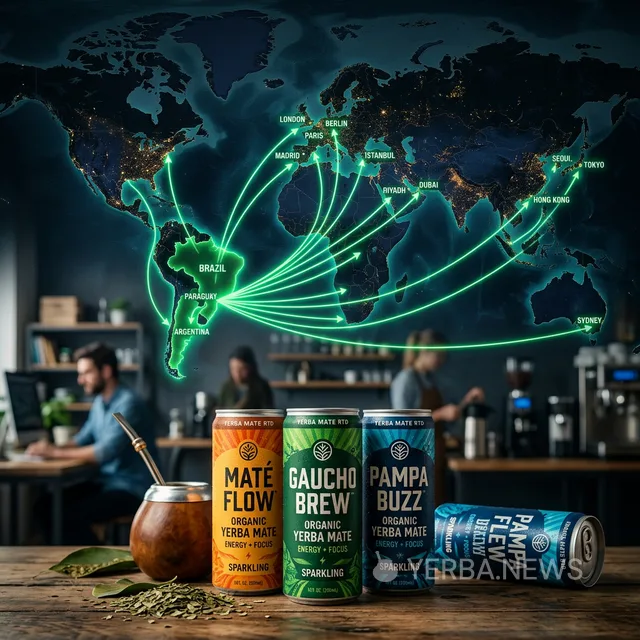
Something remarkable is happening in the global beverage industry. Yerba mate — the ancient South American infusion that has sustained gaucho culture for centuries — is experiencing what industry analysts are calling a "breakout moment," with the global market projected to reach $3.46 billion by 2035, up from $2.03 billion in 2025.
The numbers tell a story of explosive growth. Ready-to-drink yerba mate formats have surged 65% year-on-year, as reported by BeverageDaily.com, driven by a new generation of consumers who want the sustained energy of mate without the ritual of traditional preparation. This convenience revolution has transformed yerba mate from a cultural artifact into a globally competitive functional beverage.
Unlikely Trade Partners
Perhaps the most surprising dimension of yerba mate's globalization is its geography. Syria has emerged as the world's largest importer at $63 million, a legacy of the country's Druze and Alawite communities who adopted mate from Syrian-Argentine diaspora connections. The United States follows closely at $61.4 million, driven largely by the success of brands like Guayakí and a proliferating ecosystem of startup challengers.
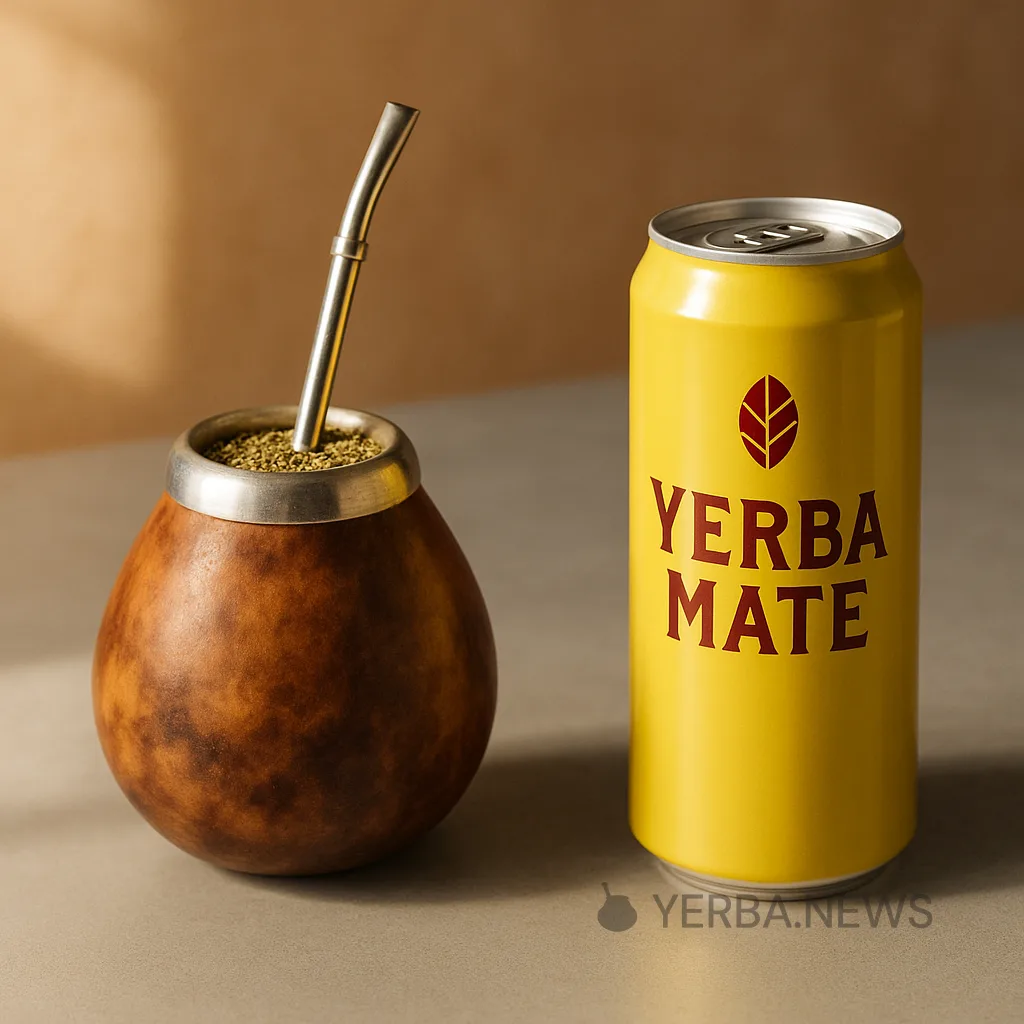
The industry is racing to meet demand. Across Argentina, Brazil, and Paraguay, processing capacity has expanded by 30% in two years. Meanwhile, organic certification has become the new entry ticket for international markets — roughly 70% of major brands now hold or pursue certifications that satisfy increasingly stringent European and Asian import requirements.
Beyond the Energy Drink
What distinguishes yerba mate's current expansion from previous waves of interest is the sophistication of its positioning. Rather than competing directly with coffee or energy drinks on caffeine content alone, brands are leveraging mate's unique pharmacological profile — the synergistic combination of caffeine, theobromine, and L-theanine — to position it as a "smart energy" alternative that delivers alertness without jitters or crash.
The cultural dimension adds another layer of differentiation that synthetic energy drinks simply cannot replicate. Yerba mate carries five centuries of communal tradition, environmental sustainability narratives, and origin stories that resonate powerfully with values-driven millennial and Gen Z consumers. In a market saturated with manufactured beverages, mate offers something increasingly rare: authenticity.