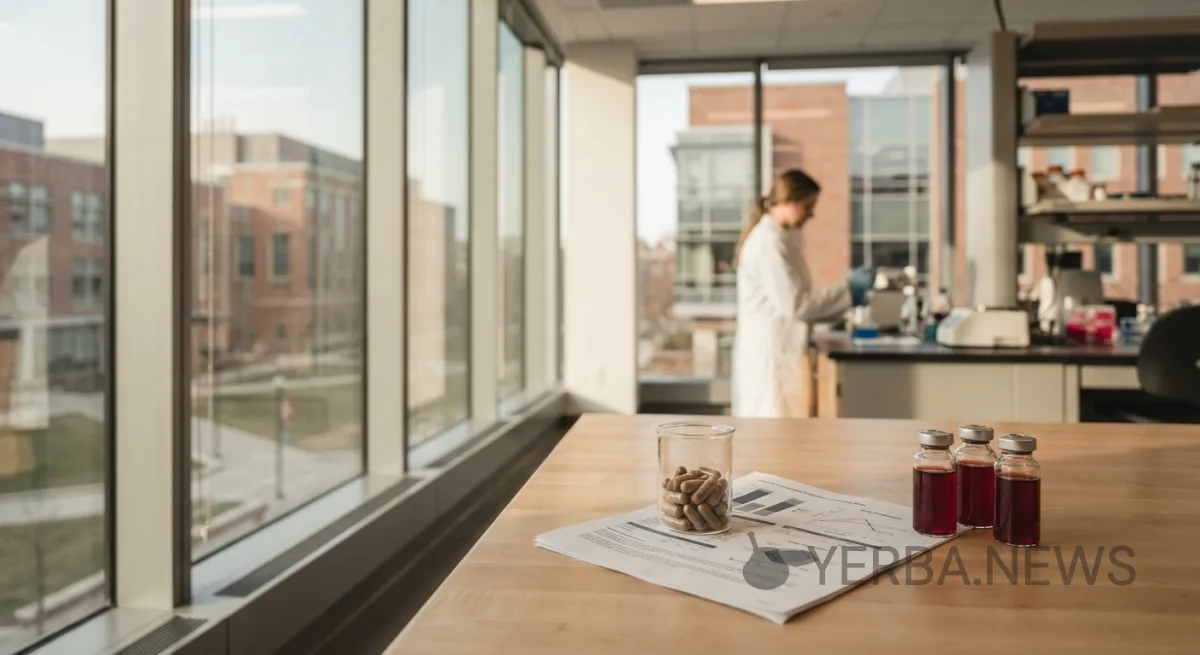
The University of North Alabama (UNA) has begun recruiting participants for a clinical research study that could advance scientific understanding of how yerba mate — the caffeinated South American infusion consumed by an estimated 500 million people worldwide — affects the health of aging populations. The study, run through UNA's Kinesiology program in Florence, Alabama, is actively enrolling adults aged 60 and older from the Shoals area to investigate whether daily yerba mate supplementation supports metabolic, cognitive, and functional health outcomes.
What the Study Measures
Participants in the UNA study will receive a suite of clinical assessments at no cost, making the trial accessible to community members who might otherwise lack access to such diagnostics. The battery of tests includes dual-energy X-ray absorptiometry (DXA) body composition analysis — measuring body fat percentage, bone mineral density, and lean muscle mass — as well as a complete blood lipid panel covering total cholesterol, LDL, and HDL fractions, and fasting glucose testing. Participants will also receive free yerba mate capsules for the duration of the study and will be entered into a $100 raffle as an additional incentive.
The study design reflects a growing interest within exercise science and gerontology in plant-based interventions that may complement physical activity in supporting healthy aging. By targeting adults over 60, the UNA researchers are focusing on a demographic where metabolic decline, bone loss, and cognitive changes converge — and where even modest interventions could have outsized clinical significance.
Why This Study Matters
While yerba mate's bioactive compounds — including caffeoylquinic acids (chlorogenic acids), saponins, and the methylxanthines caffeine, theobromine, and theophylline — have been extensively studied in laboratory and animal models, human clinical trials remain relatively scarce, and studies specifically targeting older populations are virtually nonexistent in the published literature. A 2025 systematic review and meta-analysis examining yerba mate's impact on glycemic control across randomized controlled trials found statistically significant reductions in postprandial glucose, HbA1c, and the HOMA insulin resistance index — though notably, no significant effect on fasting glucose or lipid profiles was observed, but noted that most studies enrolled younger or middle-aged participants with metabolic abnormalities [1]. Separately, a 2024 pilot study from Buenos Aires suggested a possible association between regular mate consumption and improved cognitive performance in logical memory and serial word learning tasks among adults over 50, though the authors cautioned that larger, controlled trials were needed to confirm causality [2].
The UNA study fills a critical gap by applying rigorous clinical methodology — including objective biomarkers like DXA scans, blood lipid panels, and glucose testing — to an older adult population in a controlled supplementation framework. If the results demonstrate measurable benefits, they could provide the first U.S.-based clinical evidence for yerba mate's role in geriatric preventive health.
A Broader Trend in Yerba Mate Research
The UNA trial arrives at a moment of accelerating scientific interest in yerba mate. In 2024 and 2025 alone, peer-reviewed journals published studies linking the infusion to anti-inflammatory macrophage polarization, improved antioxidant capacity, potential rheumatoid arthritis management, and GLP-1 receptor agonism via gut microbiota modulation. The compound's simultaneous activity across metabolic, inflammatory, and neurological pathways makes it an unusually promising candidate for multifactorial interventions in aging — where declines in metabolism, bone integrity, and cognition often share underlying inflammatory and oxidative mechanisms.
For residents of the Shoals area aged 60 and older, the study represents an opportunity to contribute to university-led health research while receiving comprehensive health data at no personal cost — an exchange that researchers hope will drive enrollment. As of January 2026, the study is actively accepting participants, and UNA researchers are encouraging community members, caregivers, and family networks to help with outreach.