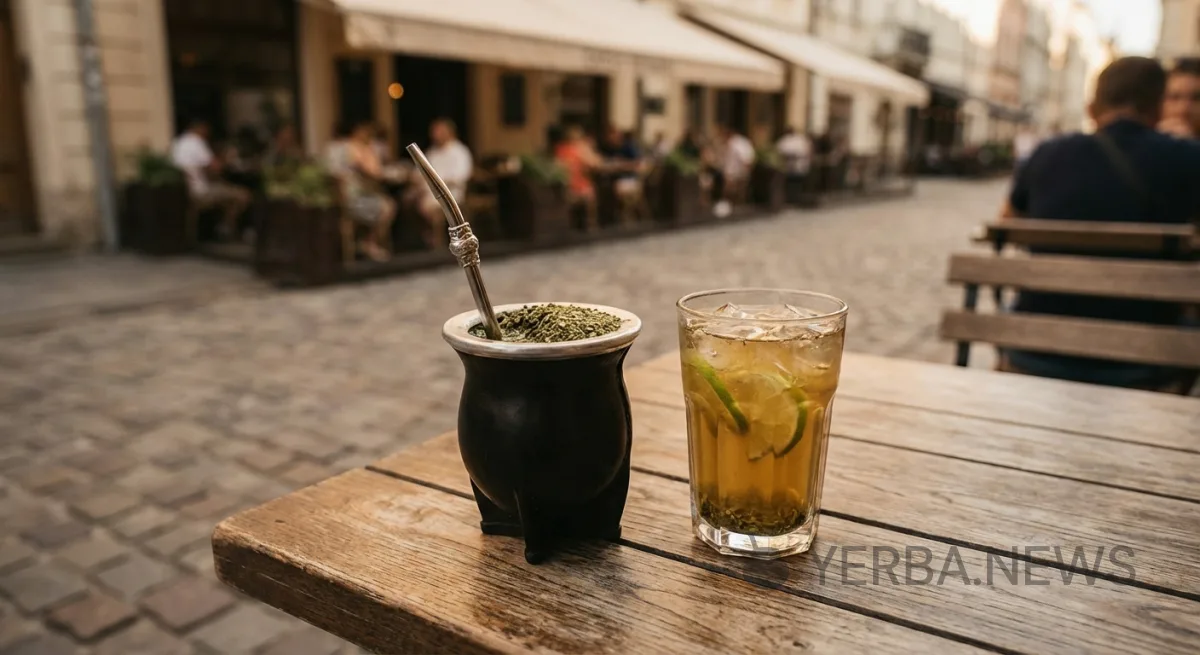
The European yerba mate market is projected to grow from an estimated $712.4 million in 2025 to $1,201.7 million — nearly $1.2 billion — by 2035, according to a comprehensive market forecast published by Future Market Insights (FMI). The 5.4% compound annual growth rate (CAGR) over the decade reflects a continent increasingly turning to the South American plant as an alternative to coffee and synthetic energy drinks.
The projection places Europe among the most dynamic growth regions for Ilex paraguariensis globally. For context, the worldwide yerba mate market is forecast to expand from $2.03 billion in 2025 to $3.46 billion by 2035 at a 5.48% annual rate, according to BeverageDaily. Europe's share of that global pie is therefore substantial — and growing.
Germany: The Engine of European Growth
Germany stands out as the clear leader in Europe's yerba mate adoption. The country is projected to achieve a 7.1% CAGR — well above the European average — driven by strong demand for natural energy drinks and sustainable food products, according to FMI. In 2023 alone, Germany recorded a 17% growth in yerba mate consumption, with wellness cafes and organic grocery chains acting as primary distribution channels, Market Reports World data indicates.
Germany's dominance is not coincidental. The country has one of Europe's most mature organic food markets, and health-conscious German consumers have increasingly sought alternatives to both conventional coffee and energy drinks containing synthetic caffeine and high sugar content. Yerba mate, with its combination of natural caffeine, theobromine, and antioxidant polyphenols, fits neatly into this demand profile.
Country-by-Country Breakdown
Beyond Germany, the United Kingdom is projected to grow at a 5.2% CAGR, having already recorded a 40% increase in yerba mate imports in recent years. France and Italy follow at 4.9% and 4.7% respectively. Notably, Germany and France together account for approximately half of all yerba mate sales in Europe, according to BeverageDaily — a concentration that highlights both the opportunity and the white space remaining in other European markets.
| Country | CAGR (2025–2035) | Key Growth Driver |
|---|---|---|
| Germany | 7.1% | Natural energy drinks, organic retail |
| United Kingdom | 5.2% | Import growth (+40%), health trends |
| France | 4.9% | Functional beverage adoption |
| Italy | 4.7% | Plant-based beverage diversification |
| Europe overall | 5.4% | Organic demand, RTD innovation |
22,000 Metric Tons and Counting
Europe consumed more than 22,000 metric tons of yerba mate in 2023, with Germany, France, and the United Kingdom as the leading importers. The continent's overall yerba mate market has expanded by approximately 35% over the past five years, a pace that reflects both category maturation and accelerating consumer adoption.
The growth trajectory is not solely a volume story. According to BeverageDaily, 60% of European consumers prioritize organic certification when purchasing food and beverages — a preference that has made the region particularly receptive to premium and ethically sourced yerba mate brands. This explains why organic and fair-trade certifications have become virtually mandatory for yerba mate products seeking shelf space in European retail.
What Is Driving European Demand
Several converging trends explain why Europe has become a high-growth frontier for yerba mate. The ready-to-drink (RTD) segment has been a catalyst, offering consumers convenience without requiring knowledge of traditional preparation methods. Energy drink alternatives represent another significant driver — European consumers increasingly view yerba mate as delivering sustained energy without the crash associated with high-caffeine synthetic products.
- Rising consumer demand for plant-based and functional beverages across the EU
- Growing awareness of yerba mate's health benefits — antioxidants, natural caffeine, theobromine
- Innovation in product formulation: RTD cans, sparkling varieties, energy shots
- European preference for sustainable and ethically sourced products
- Social media and cultural trends promoting yerba mate among younger demographics
- Expansion of distribution channels — from specialty stores to mainstream supermarket chains
The Competitive Landscape
Europe's yerba mate market sits at an interesting juncture. While traditional loose-leaf mate remains the dominant format in South American markets, European consumers are primarily encountering the plant through processed, branded products — canned RTD beverages, tea bags, and functional blends. This creates opportunities for both established South American producers seeking export growth and European-born brands catering to local taste preferences and distribution realities.
The EU's Novel Food regulations remain a factor worth monitoring. Yerba mate itself is established in European markets, but novel extract formulations face regulatory scrutiny. In 2025, the EU Parliament debated the Novel Food classification for certain yerba mate extracts, with industry groups warning of potential market disruption if overly restrictive rules were applied to derivative products.
Implications for Producers and Exporters
For Argentina, Brazil, and Paraguay — the three countries that dominate global yerba mate production — the European growth forecast signals a substantial export opportunity. Argentina exported a record 45,109 tons of yerba mate in 2024, though the bulk went to Syria (77% of shipments). A diversification toward European markets could reduce dependence on single-country concentration and access higher-margin premium segments.
The near-doubling of Europe's market over the next decade will likely reshape global trade flows, investment patterns, and brand strategies in the yerba mate industry. Whether European demand can be met sustainably — both in supply chain terms and environmental impact — remains the industry's most consequential open question.