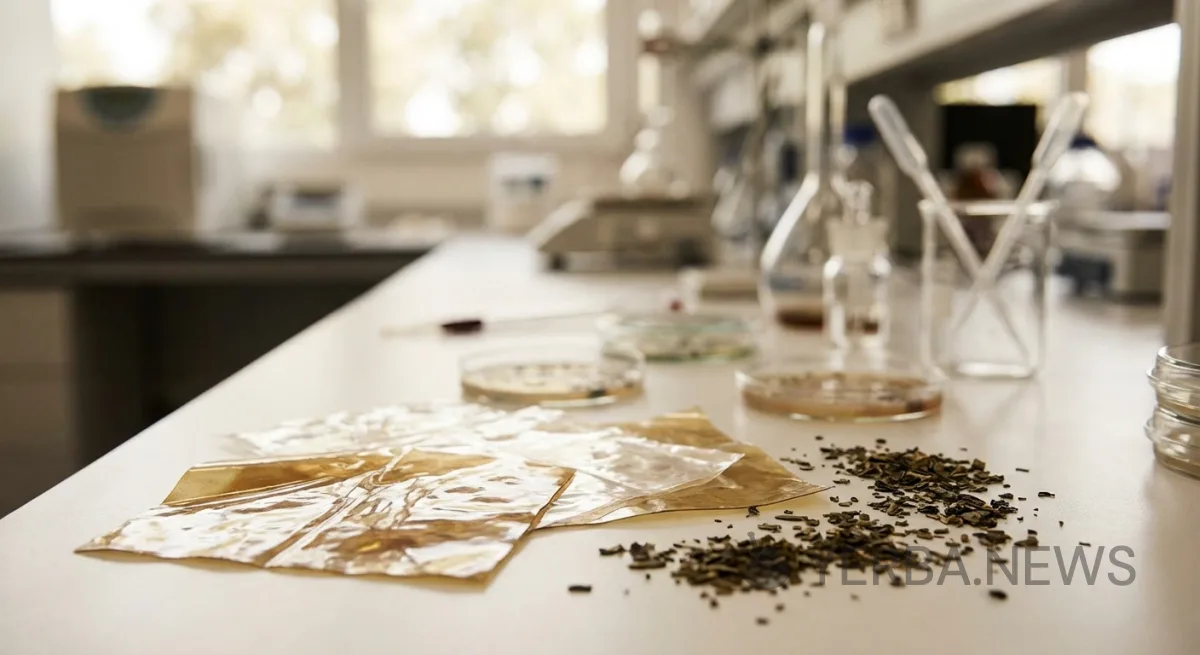
In a paper published in ACS Omega on March 2, 2026, researchers presented evidence that yerba mate polyphenol extracts — when incorporated into pullulan, a water-soluble biopolymer produced by the fungus Aureobasidium pullulans — create active food packaging coatings with three distinct functional properties: ultraviolet light shielding, antioxidant radical scavenging, and antibacterial activity against Staphylococcus aureus. The study, titled 'Phenolic-Enriched Pullulan Coatings: Molecular Interactions and Functional Properties for Active Food Packaging Applications,' demonstrates a new application for yerba mate's polyphenolic profile: not as a beverage ingredient, but as a bioactive component of biodegradable food packaging.
The Extraction and Analysis
The researchers used green ultrasound-assisted aqueous extraction to obtain polyphenol-rich extracts from yerba mate (labeled YE in the study) and, separately, from chestnut wood (WE). High-Performance Liquid Chromatography (HPLC) analysis identified the primary bioactive phenolics responsible for the mate extract's functional properties: chlorogenic acid, caffeic acid, rutin, and ellagic acid. These compounds — which are the same polyphenols responsible for yerba mate's antioxidant activity when consumed as a beverage — were shown to interact with the pullulan matrix through noncovalent bonding, integrating into the polymer film without disrupting its amorphous molecular structure.
The Three Functional Properties
The pullulan-yerba mate coatings demonstrated three measurable functional effects. First, effective UV shielding: the phenolic compounds absorbed ultraviolet radiation, protecting the coated surface from light-induced degradation — a property that is directly relevant to protecting light-sensitive foods from photooxidation during storage. Second, near-complete radical scavenging within 60 minutes: the antioxidant activity of the yerba mate polyphenols transferred to the coating matrix, creating a surface that actively neutralizes free radicals that would otherwise accelerate food spoilage. Third, antibacterial efficacy against Staphylococcus aureus: the coatings inhibited growth of this common foodborne pathogen, suggesting potential for reducing microbial contamination in packaged food products.
Beyond the Cup: Yerba Mate as Industrial Bioactive
The study positions yerba mate as a source of bioactive compounds with applications well beyond the beverage industry. The global active food packaging market — which incorporates antimicrobial, antioxidant, and barrier-enhancing agents directly into packaging materials — is projected to reach US$25 billion by 2030, driven by consumer demand for extended shelf life and reduced food waste without chemical preservatives. Yerba mate's polyphenolic profile — particularly its high chlorogenic acid concentration, which can reach 10–12% of dry weight in some cultivars — makes it a competitive source of food-grade bioactive compounds for this application.
For the yerba mate supply chain, industrial applications like active food packaging represent a potential demand channel that is entirely independent of consumer beverage trends. If yerba mate polyphenol extracts prove commercially viable as packaging bioactives, South American producers could access a market that currently sources its phenolics primarily from green tea, grape seed, and rosemary extracts — creating additional revenue streams from lower-grade leaf that is unsuitable for premium beverage products but perfectly adequate for industrial polyphenol extraction.