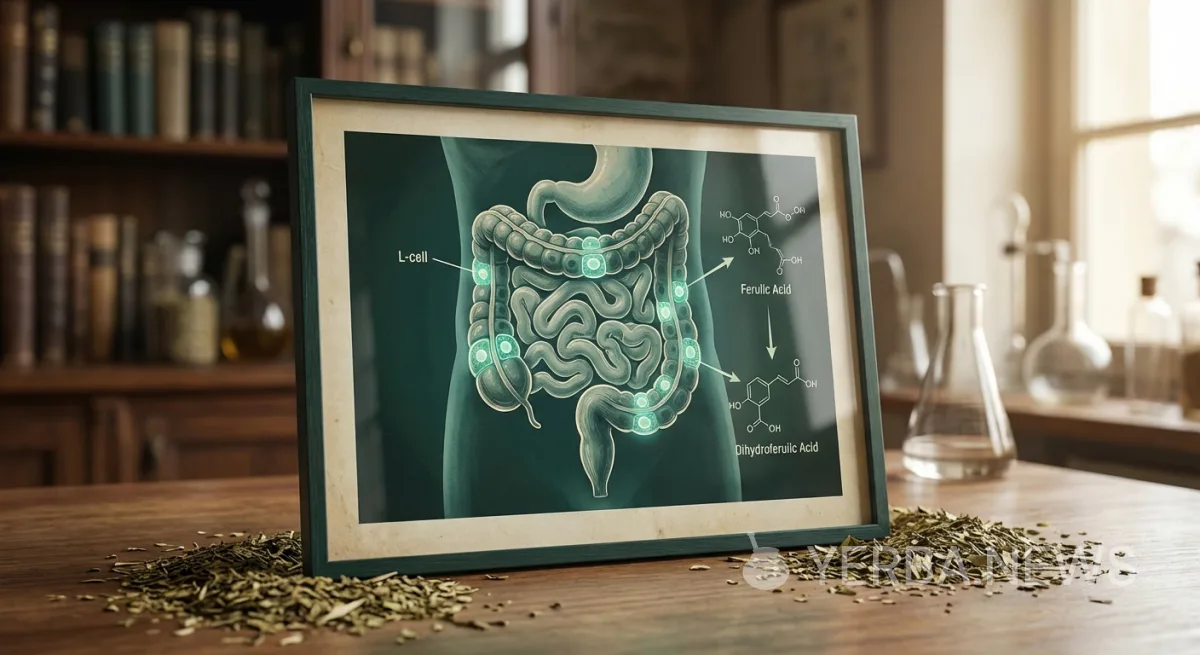
The explosion of GLP-1 receptor agonist drugs — Ozempic, Wegovy, and their competitors — into mainstream public consciousness has inevitably drawn attention to natural compounds that might stimulate similar metabolic pathways. A 2025 study published in the peer-reviewed journal Nutrients has now provided mechanistic evidence that yerba mate can indeed selectively upregulate GLP-1 (glucagon-like peptide-1) — but the pathway it uses is more complex, and more dependent on the body's own microbial ecosystem, than viral social media claims might suggest.
The Ferulic Acid Pathway
The study, titled 'The Incretin Effect of Yerba Maté (Ilex paraguariensis) Is Partially Dependent on Gut-Mediated Metabolism of Ferulic Acid,' was conducted using C57BL/6 mice — a standard murine model for metabolic research. Mice supplemented with yerba mate exhibited significantly increased GLP-1 gene expression and elevated plasma GLP-1 levels compared to control groups. Notably, the effect was selective: yerba mate did not affect gastric inhibitory polypeptide (GIP), the other major incretin hormone, suggesting a targeted rather than generalized hormonal response.
The critical mechanistic finding emerged when researchers tested yerba mate's effect on isolated intestinal L-cells — the cells responsible for GLP-1 secretion. Yerba mate extract alone did not directly stimulate GLP-1 production in these cells. However, dihydroferulic acid — a metabolite produced when gut bacteria process ferulic acid, one of yerba mate's abundant phenolic compounds — markedly stimulated GLP-1 secretion. This indicates that the incretin effect of yerba mate is mediated through the gut microbiome, not through direct chemical stimulation.
What This Means — and What It Doesn't
The findings position yerba mate as a potentially promising nutraceutical for modulating incretin pathways and supporting metabolic health. However, the researchers are careful to delineate what their data supports and what it does not. The study was conducted in mice, not humans. A separate 2025 study involving human participants reported that while yerba mate produced metabolic benefits, GLP-1 levels remained unchanged — suggesting that the animal findings may not translate directly to human physiology, or that dosing, preparation method, and individual microbiome composition play significant mediating roles.
Beyond the Ozempic Comparison
The distinction matters because social media platforms — particularly TikTok — have amplified claims that yerba mate is 'nature's Ozempic.' Medical professionals have pushed back against this framing. GLP-1 receptor agonist drugs like semaglutide operate at pharmacological doses with predictable, dose-dependent effects. Yerba mate, by contrast, appears to modestly and indirectly support GLP-1 pathways through a mechanism that depends on each individual's gut microbial composition. The Nutrients study's value lies precisely in clarifying this mechanism — providing evidence-based context for a conversation that has been dominated by anecdotal claims.
What the accumulating evidence does support is that regular yerba mate consumption sits within a dietary pattern associated with improved metabolic markers — enhanced fat oxidation during exercise, modest appetite modulation, and anti-inflammatory effects. Whether GLP-1 mediation is a significant contributor to these outcomes in humans awaits dedicated clinical trials with standardized dosing protocols.