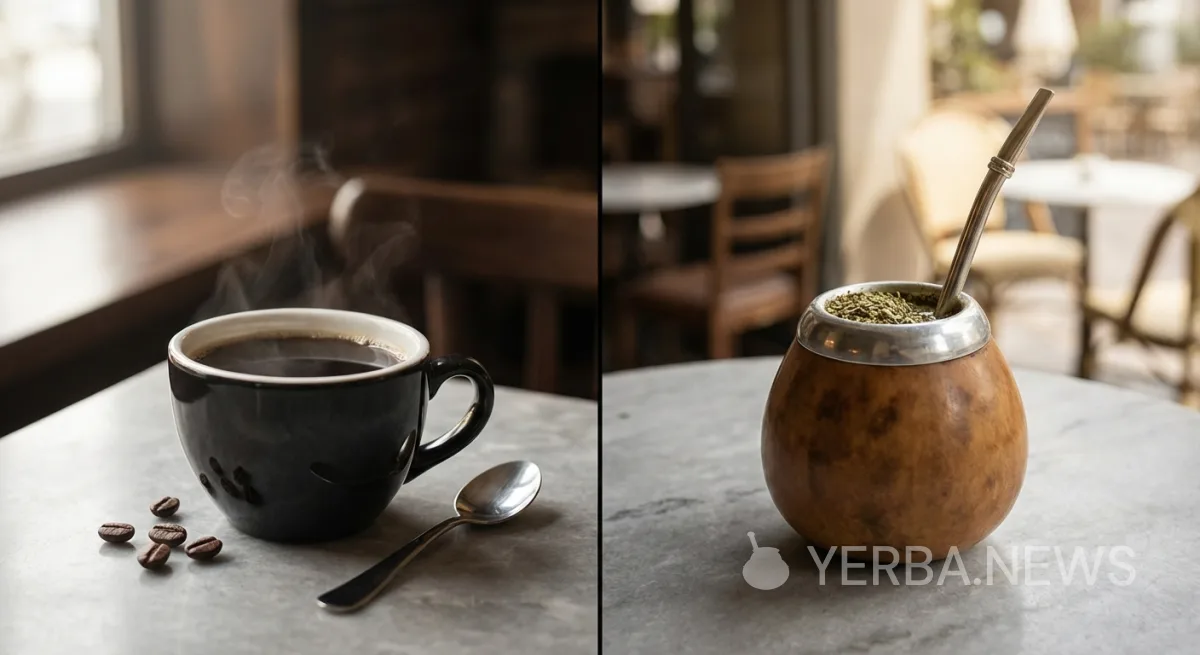
Every caffeine-containing plant on Earth produces a slightly different pharmacological cocktail. Coffee beans contain caffeine and very small amounts of other methylxanthines. Tea leaves contain caffeine and moderate theanine. Cacao beans contain primarily theobromine with small amounts of caffeine. Yerba mate — alone among the major caffeinated plants — contains pharmacologically significant quantities of all three methylxanthines: caffeine, theobromine, and theophylline. This triple-methylxanthine profile is the chemical basis for the subjective experience that mate drinkers have described for centuries: an alertness that is sustained, focused, and largely free of the agitation and crash that frequently accompany equivalent doses of coffee.
The Caffeine Dose Difference
An 8-ounce serving of yerba mate typically contains 30 to 85 milligrams of caffeine, depending on the preparation method and the specific cultivar. An equivalent serving of brewed coffee contains approximately 95 milligrams, with espresso-based drinks reaching 150 to 200 milligrams per serving. On caffeine content alone, mate is a moderate-intensity stimulant — roughly comparable to green tea at the lower end and black tea at the upper end. Yet the subjective experience of mate consumption does not correspond to what its caffeine dose alone would predict.
Theobromine: The Vasodilator
The key differentiator is theobromine — a methylxanthine that is present in pharmacologically significant quantities in yerba mate and cacao but only in trace amounts in roasted coffee. Theobromine is a milder, longer-acting stimulant than caffeine. It acts as a vasodilator (widening blood vessels rather than constricting them, as caffeine does), which can reduce blood pressure and improve peripheral circulation. Its half-life in the body is approximately 7 hours, compared to caffeine's 4 to 6 hours. The result is a stimulant effect that builds more gradually, peaks less sharply, and declines more gently than caffeine alone — the pharmacokinetic profile that mate drinkers describe as 'calm energy' or 'focused alertness.'
Theophylline and the Synergy
Theophylline — the third methylxanthine in mate — is a bronchodilator used clinically to treat asthma and COPD. In the concentrations present in yerba mate, it functions as a mild respiratory stimulant that may contribute to the sensation of physical openness and ease that mate drinkers report. The combined effect of caffeine (CNS stimulation, adenosine receptor antagonism), theobromine (vasodilation, smooth sustained stimulation), and theophylline (bronchodilation, smooth muscle relaxation) creates a pharmacological synergy that no single compound in coffee replicates.
The practical implication for consumers is straightforward: the subjective superiority of mate's stimulant profile over coffee's is not a placebo effect or a cultural mythology. It has a biochemical explanation rooted in the co-action of three structurally related but pharmacologically distinct methylxanthines, each contributing a different temporal profile and physiological mechanism. This does not mean that mate is 'better' than coffee in any universal sense — individual responses to stimulants vary, and many coffee drinkers prefer the rapid-onset intensity that caffeine-dominant beverages provide. But it does mean that the mate experience is pharmacologically distinct, and the distinction is explained by chemistry, not marketing.