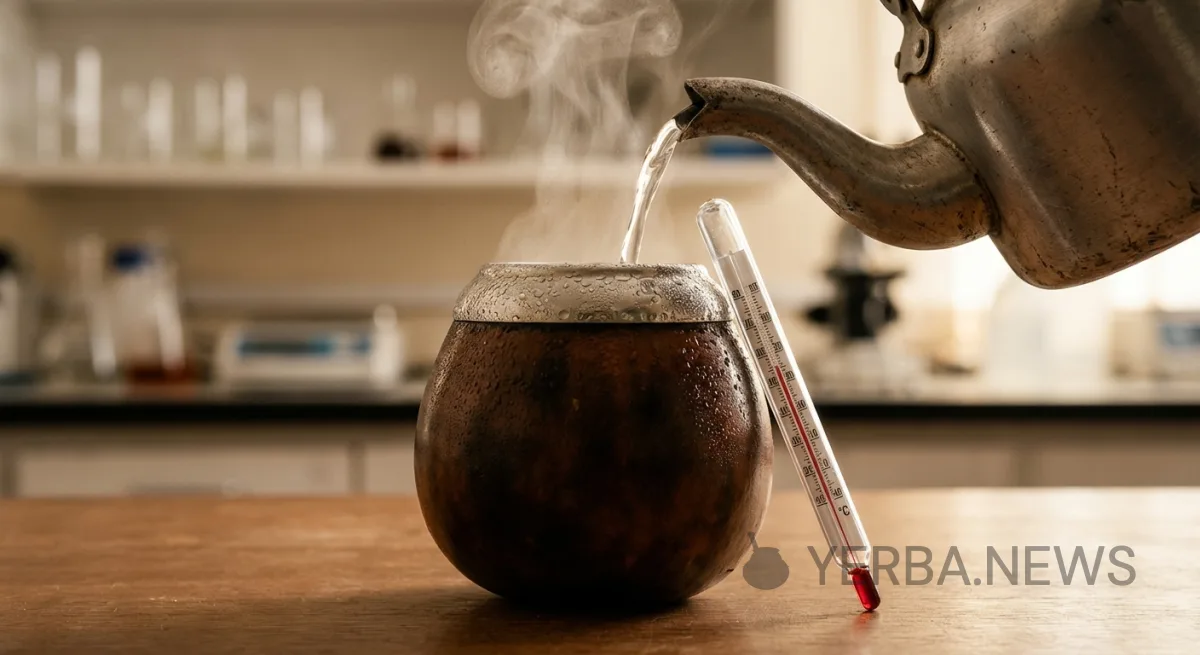
A UK Biobank analysis published in February 2025, involving nearly half a million participants, has produced the most statistically powerful evidence to date on the relationship between very hot beverage consumption and esophageal squamous cell carcinoma (ESCC). The study found that individuals who reported consuming eight or more very hot drinks per day faced a nearly six-fold increased risk of developing ESCC compared to those who consumed fewer hot beverages or consumed them at lower temperatures.
IARC's Classification: It's the Heat, Not the Plant
The UK Biobank findings are consistent with the International Agency for Research on Cancer's 2016 reclassification, in which IARC — after evaluating the available epidemiological evidence — concluded that it is the temperature of the beverage, not its chemical composition, that drives the cancer risk. IARC classified 'very hot beverages' (defined as those consumed at temperatures above 65°C / 149°F) as Group 2A — 'probably carcinogenic to humans.' At the same time, IARC downgraded yerba mate itself from Group 2A (where it had been placed in 1991) to Group 3 ('not classifiable as to its carcinogenicity to humans') when consumed at non-scalding temperatures. In plain language: cold or warm mate is not a carcinogen; very hot mate probably is — and the risk is identical to that posed by very hot coffee, very hot tea, or any other very hot liquid.
The 2025 Review of 568 Studies
A separate 2025 comprehensive review examining 568 studies on yerba mate and cancer reported an overall odds ratio of 2.24 for upper aerodigestive tract (UADT) cancers — including cancers of the oral cavity, pharynx, esophagus, and larynx — associated with mate consumption. However, this aggregate statistic conflates hot and cold consumption, traditional and modern preparation methods, and populations with varying co-exposures (notably tobacco and alcohol). The review also noted a higher chance of non-communicable thyroid cancer with daily consumption exceeding one liter, though the authors emphasized that confounding factors make causal attribution difficult.
The Mechanism
The biological mechanism linking very hot beverages to esophageal cancer is straightforward: repeated thermal injury to the esophageal mucosa triggers a cycle of cell death, compensatory proliferation, and chronic inflammation. Over years and decades, this cycle increases the probability of acquiring the genetic mutations that drive malignant transformation. The esophageal epithelium — a thin, squamous cell lining — is particularly vulnerable because it lacks the protective mucus layer that shields the stomach lining from thermal and chemical insult.
Practical Implications
For yerba mate consumers, the evidence points to a simple harm-reduction strategy: let the water cool. The traditional Argentine recommendation of using water at 70–80°C for mate preparation is already below the 65°C threshold at which the liquid contacts the lips and esophagus (since cooling occurs during the pouring and sipping process). Tereré — the cold-water preparation common in Paraguay — eliminates the thermal risk entirely. For the rapidly growing RTD yerba mate market, the question is moot: canned and bottled products are consumed at refrigerator or ambient temperature. The temperature problem is specific to traditional hot mate consumed at extremely high temperatures, a practice that the IARC and UK Biobank data suggest should be moderated — not for cultural reasons, but for straightforward biophysical ones.