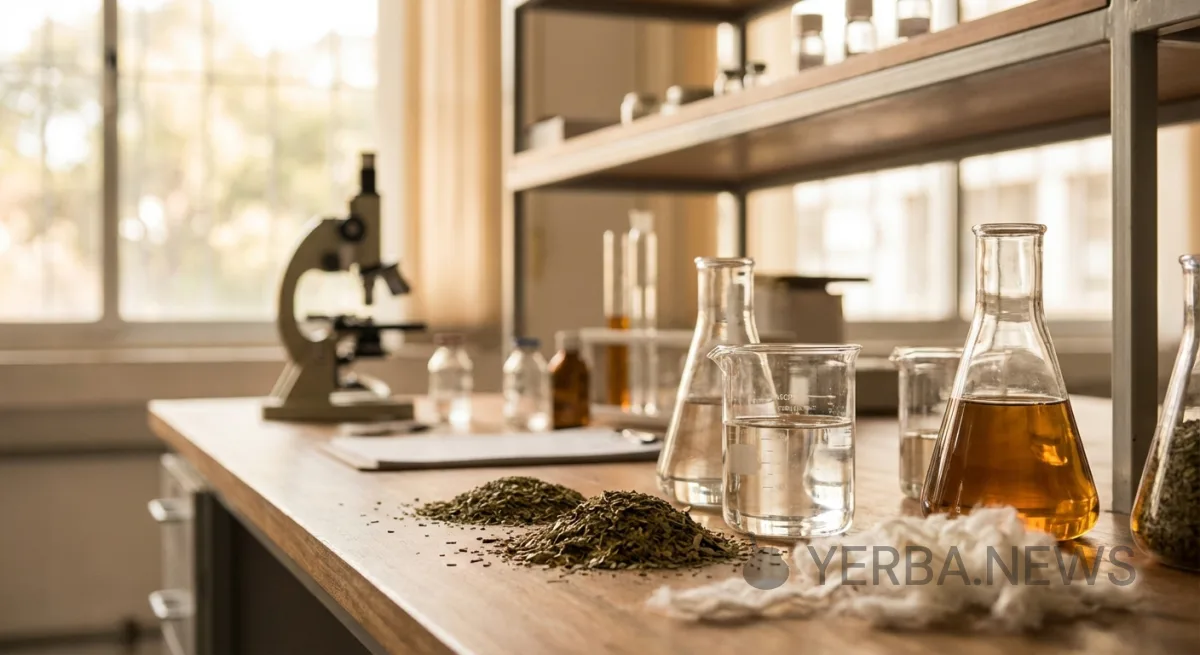
Argentina alone generates an estimated 220,000 tons of yerba mate waste annually — the spent leaves, twigs, and dust that remain after brewing. This mountain of agricultural residue has historically been treated as an environmental liability: composted at best, landfilled at worst. A study published in Industrial Crops & Products, a peer-reviewed journal in the Elsevier portfolio, has now demonstrated a high-value second life for this waste stream: as a raw material for cellulose fibers capable of removing emerging contaminants from drinking water.
From Gourd to Laboratory
The research team extracted cellulose fibers from discarded Ilex paraguariensis leaves using a multi-step chemical processing method that removes lignin, hemicellulose, and other non-cellulosic components. The resulting fibers were then tested for their adsorption capacity against synthetic dyes — a widely used proxy for emerging organic contaminants in water treatment research, because many industrial dyes share molecular characteristics with pharmaceutical residues, pesticides, and other micropollutants.
Silver Nanoparticle Enhancement
The study's most striking finding concerns the functionalization of yerba mate cellulose fibers with silver nanoparticles (AgNPs). When the extracted cellulose was used as a scaffold for AgNP deposition, the resulting composite material demonstrated potent antimicrobial activity against two clinically significant bacterial species: Escherichia coli (a gram-negative indicator organism for fecal contamination) and Staphylococcus aureus (a gram-positive pathogen associated with wound infections and foodborne illness). This dual functionality — simultaneous chemical adsorption and microbial disinfection — positions the material as a potential candidate for point-of-use water treatment systems in resource-limited settings.
Implications for Circular Economy
The research contributes to a growing body of work that views agricultural waste not as a disposal problem but as an underexploited feedstock for advanced materials. Yerba mate waste is particularly well-suited for cellulose extraction because the plant's cell wall composition yields fibers with favorable surface chemistry for contaminant binding. The authors note that scaling the process could simultaneously address two challenges facing yerba-mate-producing regions: waste management and access to affordable water purification technologies.
The study joins other recent investigations into valorizing yerba mate waste, including the conversion of spent leaves into bio-oil and industrial chemicals by Argentine scientists — a complementary approach that targets the non-cellulosic fraction of the same waste stream. Together, these initiatives suggest that the economic equation of yerba mate production may be on the verge of a fundamental recalculation, one in which every component of the plant chain generates value.