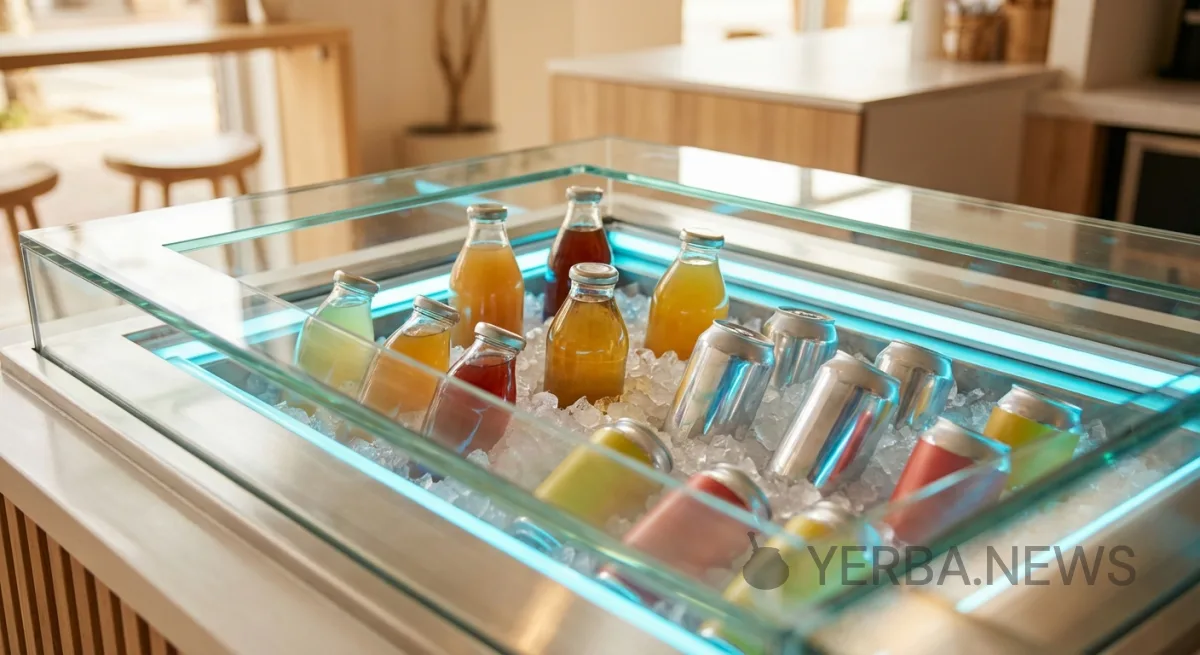
The global yerba mate market reached an estimated US$2.1 billion in 2025, and the force driving its acceleration is unmistakable: ready-to-drink (RTD) products. According to market intelligence from BeverageDaily and Global Growth Insights, the RTD yerba mate segment has grown by approximately 65% year-over-year — a rate that outpaces not only traditional loose-leaf mate sales but also the broader RTD beverage category. The surge reflects a structural shift in how yerba mate reaches consumers: from a ritual requiring gourds, bombillas, and hot water to a grab-and-go product competing directly with energy drinks, iced teas, and functional beverages on refrigerated shelves.
What's Driving the Boom
Three converging consumer trends explain the RTD growth. First, the 'clean energy' movement: consumers — particularly Millennials and Gen Z — are migrating away from synthetic energy drinks loaded with taurine, artificial sweeteners, and chemically derived caffeine toward beverages with naturally sourced caffeine and minimal ingredient lists. Yerba mate fits this demand precisely, offering 150–180 mg of naturally occurring caffeine per can alongside polyphenols and antioxidants. Second, convenience: the traditional mate ritual, while culturally rich, requires equipment, preparation time, and water temperature management that create barriers to trial and adoption among consumers unfamiliar with the practice. RTD eliminates these obstacles entirely. Third, flavor innovation: brands are introducing fruit-forward, sparkling, and hybrid formulations that make the often-bitter taste of yerba mate accessible to palates accustomed to sweetened beverages.
The Competitive Landscape
The RTD category is increasingly crowded. Yerba Madre (formerly Guayakí) remains the dominant player in North America, but a wave of challengers has emerged: CLEAN Cause, with its addiction-recovery social mission and rapid c-store expansion; Mateína, the Canadian brand that recently secured national Whole Foods distribution; Drink Weird, which is pushing into multi-state convenience-store deals; YATE, targeting nightlife and electronic music scenes in Los Angeles; and Uncle Matt's Organic, the Florida citrus brand that launched its first RTD yerba mate line in 2025. International competitors include CBSé from Argentina, whose flavored yerba mates are establishing presence in European RTD formats.
Over 70% Prefer Organic
Market research indicates that over 70% of consumers now prefer organic or naturally sourced yerba mate — a preference that is reshaping supply chains. USDA Organic and EU Organic certifications have become table stakes for RTD brands targeting premium natural grocery channels, while regenerative organic certifications (such as those held by Yerba Madre) serve as differentiators in an increasingly competitive landscape. The organic premium flows upstream to producers in Misiones, Paraná, and Itapúa, where certification costs remain a barrier for smallholders — a tension that the industry has yet to resolve.
Looking ahead, industry analysts project the global yerba mate market to reach approximately US$3.0 billion by 2030, with RTD products expected to account for an increasing share. The category's trajectory mirrors those of kombucha (which grew from US$1 billion to US$4 billion in a decade) and cold-brew coffee (which achieved mainstream penetration within five years of its initial specialty-market introduction). For yerba mate, the RTD revolution is not merely a distribution strategy — it is a category-defining transformation that is fundamentally altering how the world encounters and consumes the beverage.