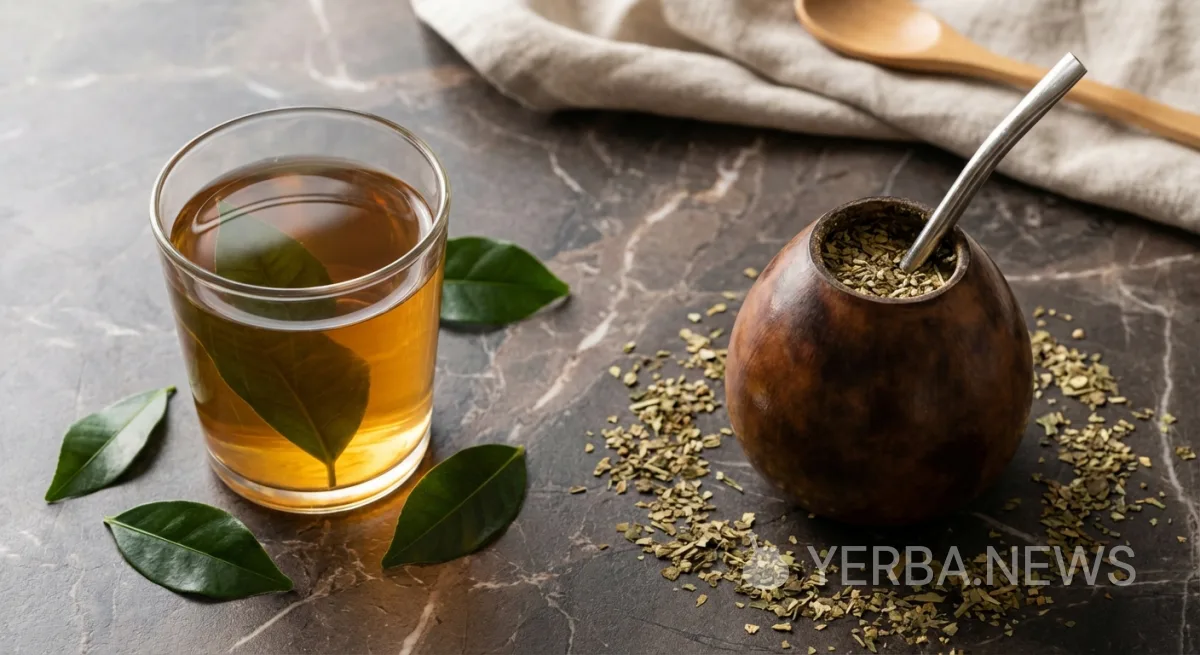
The global functional-beverage market has room for more than one caffeinated holly plant — and the emerging rivalry between yerba mate (Ilex paraguariensis) and guayusa (Ilex guayusa) increasingly invites direct comparison. Both belong to the Ilex (holly) genus, both are native to South America, and both deliver natural stimulation without the jittery crash often associated with coffee. But the similarities mask meaningful differences in chemistry, flavor, cultural context, and health profile that consumers and clinicians should understand.
Origins and Geography
Yerba mate is cultivated primarily in Argentina, Brazil, Paraguay, and Uruguay — the temperate and subtropical zones of South America's southern cone. It has been consumed for centuries by the Guaraní people and was commercialized by Jesuit missionaries beginning in the 17th century. Guayusa, by contrast, originates from the Amazon Rainforest, predominantly Ecuador, with smaller production in Peru and Colombia. Its traditional use is centered in the Indigenous Kichwa communities of the Ecuadorian Amazon, where it has been consumed in pre-dawn rituals for generations.
The Chemical Profile
Both plants contain caffeine as their primary xanthine alkaloid, but their secondary compound profiles diverge significantly. Yerba mate contains caffeine (30–75 mg per cup depending on preparation), theobromine (a mild vasodilator also found in chocolate), and theophylline (a bronchodilator). Its polyphenol content — dominated by chlorogenic acid, caffeic acid, and rutin — is among the highest of any widely consumed beverage, with antioxidant capacity exceeding that of green tea in multiple comparative assays.
Guayusa contains caffeine in broadly comparable amounts (approximately 30–66 mg per cup), theobromine, and — critically — L-theanine, an amino acid rarely found outside Camellia sinensis (true tea). L-theanine promotes a state of relaxed alertness by modulating alpha brain wave activity, and its presence in guayusa is frequently cited as the basis for the beverage's reputation for providing 'clean energy' — stimulation without anxiety. Guayusa also lacks tannins, which means it does not become bitter even with extended steeping.
Flavor and Preparation
The sensory experience is markedly different. Yerba mate delivers a bold, earthy, and often smoky or vegetal flavor — an acquired taste that devotees describe as complex and layered. Guayusa is smoother, milder, and naturally sweet, with subtle earthy undertones that some compare to a gentle green tea. For consumers approaching both beverages for the first time, guayusa offers a lower barrier to entry; for connoisseurs seeking depth and cultural engagement, yerba mate's ritualistic preparation in a gourd with a bombilla remains unmatched.
The PAH Question
One area where guayusa holds a clear advantage is PAH (polycyclic aromatic hydrocarbon) content. Traditionally processed yerba mate is smoke-dried over wood fires, which can introduce PAHs — a class of compounds classified as potentially carcinogenic. Guayusa is typically air-dried or dried using natural gas-fired ovens, resulting in negligible PAH levels. Air-dried yerba mate products are increasingly available and address this concern, but consumers must actively seek them out. For both beverages, cold-brewing further minimizes any chemical transfer into the infusion.