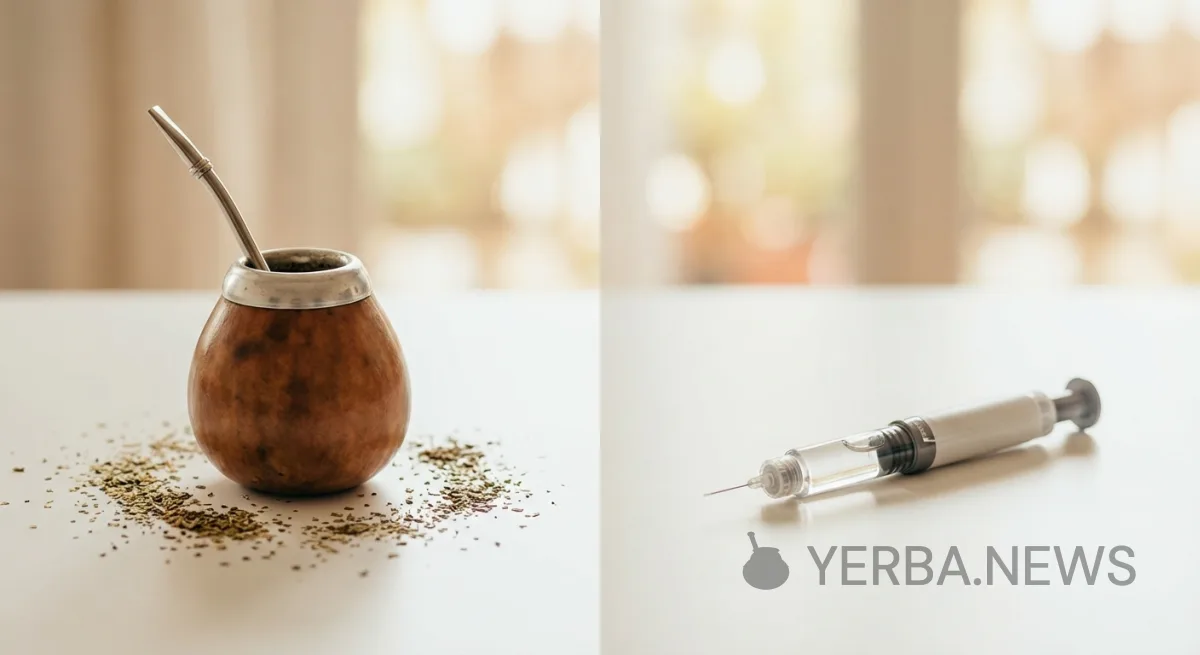
The claim has surfaced with the reliability of a seasonal trend: yerba mate, the South American infusion consumed by millions, is being promoted on TikTok as 'nature's Ozempic' — a natural substitute for the GLP-1 receptor agonist medications (semaglutide, sold as Wegovy and Ozempic) that have transformed the weight management landscape since their FDA approval. The videos, which have accumulated billions of collective views across the platform, typically feature personal testimonials alongside cherry-picked references to scientific literature. The result is a narrative that medical professionals say conflates correlation with causation and overstates yerba mate's pharmacological capabilities.
What the Science Actually Shows
Yerba mate does contain bioactive compounds with demonstrated, if modest, relevance to metabolic health. The infusion delivers caffeine (typically 85–120 mg per serving), polyphenols including chlorogenic acid, and saponins — compounds that have been associated in preclinical and small-scale human studies with increased fat oxidation, mild appetite suppression, and enhanced thermogenesis. Some researchers have noted that yerba mate may increase GLP-1 activity — the same hormonal pathway targeted by semaglutide — though the evidence for this mechanism comes primarily from animal models and in vitro studies that have not been replicated in robust human clinical trials.
Women's Health magazine addressed the trend directly in March 2025, consulting physicians and registered dietitians who were unequivocal in their assessment. The publication reported that while yerba mate may offer benefits comparable to other caffeinated beverages — marginally boosting metabolic rate and providing short-term appetite reduction — its effects are 'nowhere near the appetite suppressant effect as Wegovy.' Medical experts quoted in the article emphasized that comparing a herbal infusion to an FDA-approved medication that produces an average 15% body weight reduction over 68 weeks of use is fundamentally misleading.
The Pharmacological Gap
Wegovy (semaglutide 2.4 mg) is a GLP-1 receptor agonist — a synthetic peptide that mimics the glucagon-like peptide-1 hormone, slowing gastric emptying, reducing appetite signaling in the hypothalamus, and improving insulin sensitivity through a well-characterized pharmacological mechanism. The drug undergoes rigorous FDA review, requires a prescription, and carries documented side effects including nausea, diarrhea, and rare but serious risks such as pancreatitis and thyroid tumors. Its efficacy is supported by large, randomized, placebo-controlled clinical trials with thousands of participants.
Yerba mate, by contrast, is a food product with over 200 identified bioactive constituents that may act synergistically to produce mild metabolic effects. While these effects are real and documented — a 2024 randomized controlled trial published via PubMed demonstrated that yerba mate consumption decreases circulating inflammatory biomarkers and increases serum antioxidant capacity — they operate at an entirely different scale than targeted pharmacological intervention. The comparison between the two, physicians note, is roughly analogous to comparing the cardiovascular benefits of walking to those of cardiac surgery.
The Broader Pattern
The yerba mate–Ozempic comparison fits within a larger pattern of social media health trends in which natural products are reframed as substitutes for prescription medications. Previous iterations have involved berberine ('nature's metformin'), apple cider vinegar, and various adaptogenic mushrooms — each promoted with a similar mix of anecdotal evidence and selective citation. Medical professionals consistently advise that while dietary components like yerba mate can play a supporting role in metabolic health, consumers should approach TikTok health advice with skepticism and consult healthcare providers before substituting social media recommendations for evidence-based treatments.
Yerba mate may offer modest benefits as part of a healthy diet, but comparing it to Wegovy is like comparing a flashlight to a spotlight. They're not in the same category.
— Medical commentary compiled by Women's Health, March 2025